
Saving money in the Philippines has become a lot more intentional for me. I don’t follow one strict budgeting system or try to avoid every expense I enjoy. Instead, I pay attention to where my money goes, save before I start spending, compare prices, and use different accounts and financial products based on how I manage my money.
I still eat out with friends, order coffee, use a credit card, and buy things I want. I just try to make sure those purchases fit into my budget. Money can disappear pretty quickly when you aren’t paying attention, especially when several small purchases start adding up.
These are the habits I personally use to save money and manage my finances.
Referral disclosure: Some products and services mentioned in this article may include a referral code that I share. If you sign up using my referral code and qualify for an offer, I may receive a reward at no extra cost to you. I only share codes for products and services that I personally use or have experience with.
I Save Money Before I Start Spending
One of my main saving habits is setting money aside when I receive my income.
I don’t wait until the end of the month to see what I have left because there always seems to be something else to spend money on. There are bills, meals with friends, online shopping, and those random purchases that somehow looked like a good idea at the time.
Instead, I decide how much I want to save first and move that money away from my everyday spending account.
If you’re unsure how much to save, the 50/30/20 rule can be a simple starting point. It suggests putting 50% of your after-tax income toward needs, 30% toward wants, and 20% toward savings and debt payments.
For example, if I receive ₱30,000 after taxes, the basic breakdown would be:
I don’t treat these percentages as strict rules. Someone supporting their family, paying rent, or managing debt may have a completely different budget. The 20% savings portion is simply a useful starting point if it fits your situation.
For me, the important part is saving first instead of waiting to see what’s left at the end of the month.
I Track My Expenses
I also track my expenses because I want to know where my money is actually going.
When I started paying closer attention, I noticed that eating out and food delivery were taking up more of my budget than I expected. A ₱200 meal doesn’t look like much by itself, but several meals, delivery fees, and the occasional “sige na nga” order can add up.
I usually pay attention to categories such as:
Tracking my expenses also helps me see which purchases were planned and which ones happened because I was bored, hungry, or spending too much time online.
I Keep My Savings in Different Accounts
I don’t keep all of my savings in one account. I have several digital bank accounts, and I like having different options for saving and managing my money.
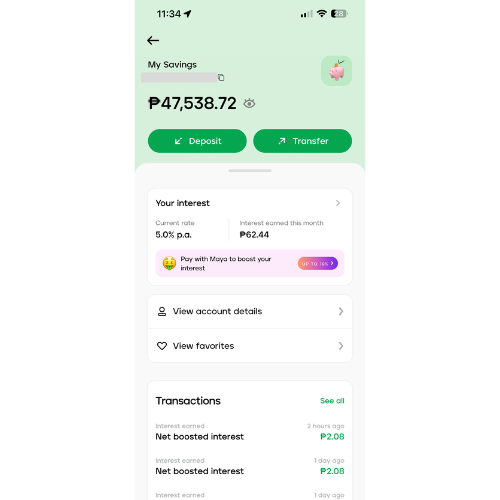
For example, I use Maya’s savings feature because I like the savings challenges. The challenges give me a specific target to work toward, so I can see the percentage I’m trying to reach rather than simply putting money into an account without a particular goal.
I also use Maya to pay my internet bill. I usually get around 5% through the savings feature, although I don’t move all my money there just to chase a particular rate.
Since I already use several digital banks, I prefer to diversify my savings rather than keep everything in one place.
Rates, requirements, and promotional offers can change, so I check the current terms before making decisions.
Get a ₱50 Maya Voucher
New to Maya? Use my referral code when you sign up and complete the required steps to qualify for a ₱50 Maya voucher.
Voucher and eligibility requirements are subject to Maya’s current referral promotion. See the referral mechanics →
I Use Bank Promotions When They Match Expenses I Already Have
I also check promotions from the banks and financial apps I already use, especially when the offer applies to something I was planning to spend money on anyway.
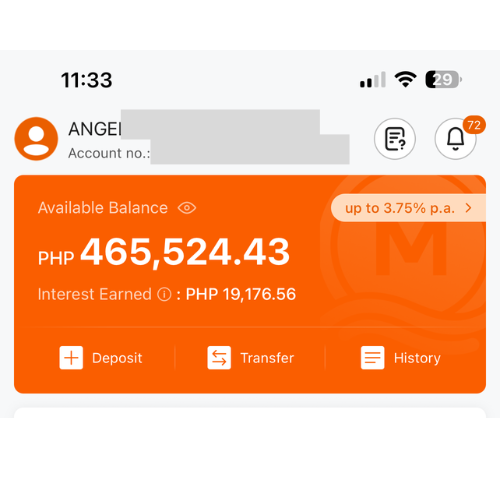
One example is MariBank, formerly SeaBank. I’ve earned around ₱19,000 in total since I opened my account, with most of it coming from the interest I’ve earned on my savings. I’ve also received some earnings from promotions and offers along the way.
I also check their promotions from time to time. For example, they had a promotion offering 3% cashback on gas purchases, and I used it because I was already going to buy gas.
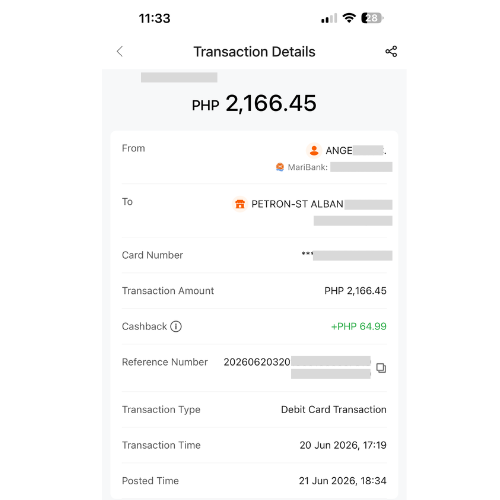
That’s the kind of promotion I pay attention to. If I’m already going to spend the money, I’ll check whether there’s an eligible offer that can give me something back.
I don’t try to spend more just to qualify for a promotion. Getting cashback isn’t much of a saving if the promotion convinces me to buy something I didn’t need.
Get ₱150 with My MariBank Referral Code
Use my referral code when signing up for MariBank. You can earn ₱150, and I’ll earn ₱100 when the referral qualifies.
Referral rewards are subject to MariBank’s eligibility requirements and terms. See the referral mechanics →
I Use Credit Card Rewards for Purchases I Already Planned
I also use a UnionBank Platinum Visa credit card for certain purchases, especially when I can earn rewards or take advantage of a promotion.
One thing I looked for when choosing my card was a no-annual-fee-for-life offer. I’ve also received around ₱1,000 in cash credit from rewards, and when I bought my MacBook, I received a ₱3,750 e-gift through a promotion.
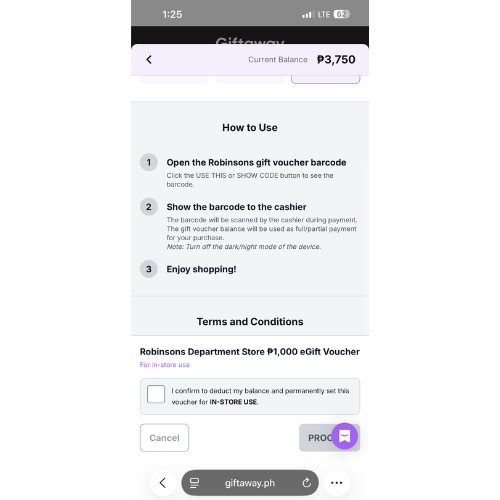
These are based on my own experience, and credit card rewards and promotions depend on the card and its current terms.
I don’t use my credit card as a reason to spend more. If I wasn’t planning to buy something, getting cashback or points isn’t enough of a reason for me to purchase it. A ₱50 reward doesn’t make a ₱1,000 unnecessary purchase a saving.
My UnionBank Referral Code
If you’re planning to apply for a UnionBank credit card, you can use my referral code when applying. Any welcome offers or rewards for new applicants depend on UnionBank’s current promotions and eligibility requirements.
Referral rewards and applicant offers are subject to UnionBank’s current terms and eligibility requirements. See the referral mechanics →
I Compare Prices Before Buying
I don’t assume that the first price I see is the best deal.
When I want to buy something, I compare prices online and in physical stores. I also check delivery fees, discounts, product sizes, and available promotions.
For example, say I want to buy Dove Sensitive soap. I first check the price on the SM Supermarket website because the online price is usually the same as the price in their physical stores.
Then, I compare that price with the price on Shopee. I’ve realized that just because something is on sale on Shopee doesn’t always mean you’re actually saving money.
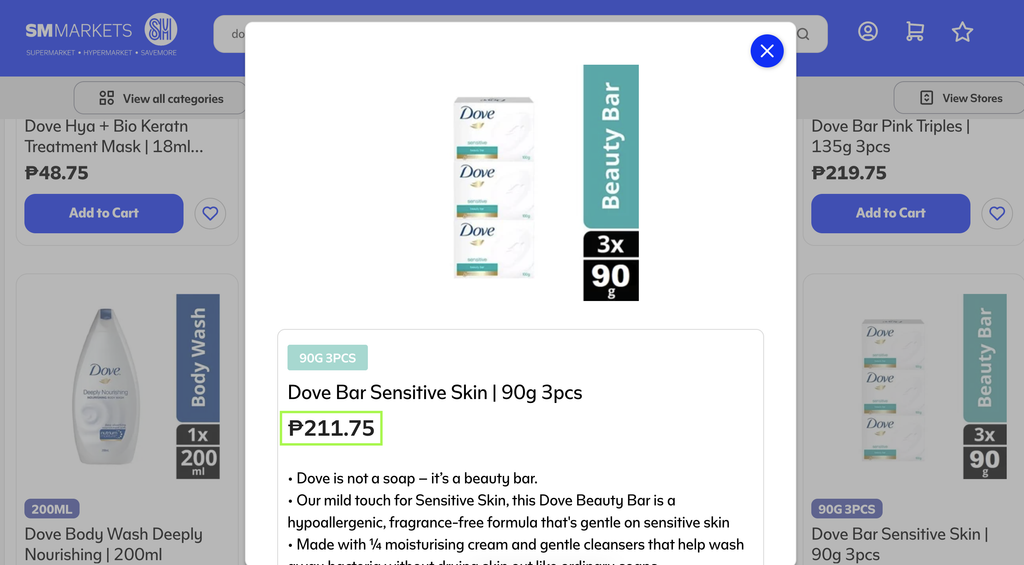
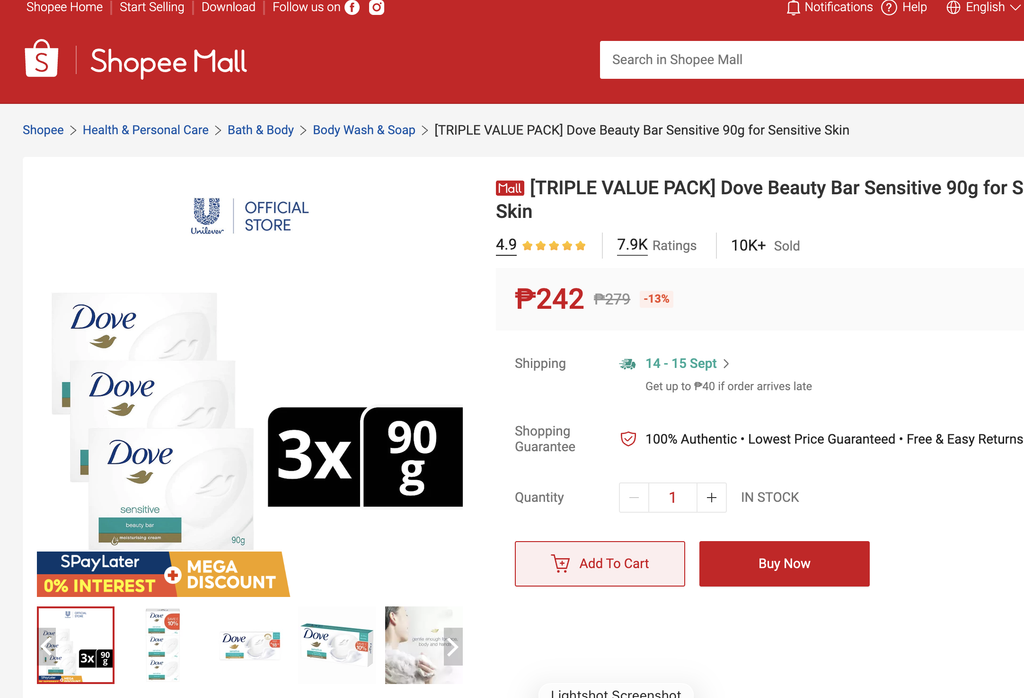
In this example, Dove Sensitive bars at SM Supermarket are ₱30.25 cheaper than the same product on Shopee, even though the Shopee listing is marked as “on sale.”
Another tip of mine is to look for grocery stores where many sari-sari store owners shop. These stores often have lower prices because they cater to people who buy products in bulk to resell. I’ve found that some everyday items can be much cheaper there compared to regular supermarkets.
I also look at the final amount instead of focusing only on the advertised discount. A 20% discount doesn’t really save me money if I only bought the item because I saw the sale.
I Avoid Buying Things I Don’t Need
I’ve become more careful about buying things simply because they’re popular.
I don’t regularly buy new clothes, makeup, Labubu, water bottles, or planners because I already have enough of them. I have also received plenty of water bottles from friends and companies, so I have enough bottles to open a small water station…
I used to pay more attention to beauty influencers, especially when I was in college. I saw skincare recommendations all the time and often wanted to try whatever product was being called a “holy grail.”
Eventually, I started asking myself whether I actually needed the product or whether I simply wanted it because I’d seen it several times.
Now, I try to use what I already have before buying another version of the same thing.
I Take Social Media Breaks When I Start Wanting Too Many Things
Social media can make spending money feel very normal.
If I see enough posts about skincare, clothes, restaurants, gadgets, or other products, I can start wanting things that weren’t even on my shopping list.
I’ve unfollowed beauty influencers and accounts that make me want to shop more. I also take social media breaks when I notice that I’m spending too much time looking at products.
I still use social media, but I don’t want my shopping list to be created by my feed.
I Spend Less on Food Delivery and Eating Out
Food is one area where I’ve become more conscious of my spending.
I still enjoy eating out with friends and family, and I usually order coffee when I’m meeting them on weekends. I just don’t want every meal outside the house to become an unplanned expense.
When I’m home, I try to eat what’s already available instead of ordering food simply because I don’t feel like preparing something.
Sometimes there’s perfectly good food in the kitchen, but my brain is acting like I live in a restaurant with free delivery.
I don’t try to remove eating out completely. I prefer to treat it as something I plan and budget for.
I Use One Streaming Platform at a Time
I enjoy watching shows and movies, but I don’t need to pay for every streaming service at the same time.
I usually choose one platform based on what I want to watch. When I’ve finished the shows I’m interested in, I can decide whether I still want to keep the subscription.
I also check my recurring payments from time to time. A single subscription may look small, but several subscriptions can take up a noticeable part of a monthly budget.
I Use What I Already Have
One of my simplest saving habits is using things until I’ve actually used them.
For example, I sometimes cut skincare bottles open when there’s still product inside. I also add a little water to my shampoo bottle when there’s still shampoo left in the container.
I also try to maintain things I already own instead of replacing them immediately. In many cases, taking care of something costs less than buying a replacement.
Of course, there are things that should be replaced for safety or hygiene reasons. I just don’t want to throw something away when there’s still a reasonable use for it.
I Set Boundaries When Lending Money
I don’t usually lend money to relatives.
If someone close to me needs financial help and I decide to give something, I treat it as money I’m willing to lose rather than money I’m expecting to get back.
I only give an amount I can afford because I don’t want someone else’s financial problem to become my own financial problem.
A family loan can also come with a free bonus feature: awkward family gatherings.
I Consider Time Deposits for Money I Don’t Need Soon
I also look at time deposits when I have money that I don’t expect to use in the short term.
A time deposit keeps money in an account for a specific period, and the interest rate and conditions depend on the bank and product.
I don’t put all of my savings into time deposits because I still want some money to remain accessible.
For money that I know I won’t need soon, I compare the available rates, terms, and withdrawal conditions before deciding.
I Also Focus on Increasing My Income
Saving money is important, but I also try to increase my income whenever I can. There is only so much you can cut from your budget. You still need to pay for food, bills, transportation, and other essentials.
When I earn more, I have more money available for savings without having to cut out everything I enjoy. I focus on improving my skills, looking for better work opportunities, and taking on extra projects when my schedule allows.
For me, increasing my income does not always mean starting a business or working multiple jobs. Sometimes, it means learning new skills, applying for better-paying roles, asking for a raise, or finding freelance work that fits my experience.
I also try to avoid increasing my lifestyle expenses every time my income goes up. Instead, I put a large part of the extra money toward my savings and financial goals.
How Much Can I Save in a Year?
I like looking at savings over a full year because monthly amounts can add up.
For example, if I save ₱5,000 every month:
This example doesn’t include interest, cashback, or additional income. It’s simply what happens when I set aside ₱5,000 every month.
If I wanted to save ₱100,000 in one year, I would need to save about ₱8,333 per month.
The amount someone can save depends on their income, bills, family responsibilities, debt, and other expenses.
My Approach to Saving Money
My approach to saving money in the Philippines is simple. I save before I spend, track my expenses, compare prices, avoid unnecessary purchases, and make the most of the accounts and financial products I already use.
I still spend on things I enjoy, but I try to make sure my spending fits my budget and my priorities. For me, that’s what saving money looks like in everyday life.