

Laundry seems straightforward: put clothes in the machine, add detergent, press start. Yet, the laundry basket always seems to refill itself, socks still manage to disappear, and there’s that familiar pile of clothes left on the chair.
That chair is a special spot, where clothes that aren’t quite ready for the hamper but aren’t dirty enough for the wash tend to gather. At some point, it almost becomes an unofficial piece of furniture.
Laundry isn’t just about clean clothes; it comes with its own set of expenses. Detergent, electricity, water, dryer fees, and those occasional laundromat trips can all add up. The bright side? There’s no need to wash everything right away or stock up on fancy products to keep costs in check.
Here are practical ways to lower laundry costs, plus a few tips to make laundry day less expensive and maybe even a bit less frustrating.
Use the Right Amount of Laundry Detergent
More detergent doesn’t always mean cleaner clothes. It’s easy to reach for an extra splash when something smells questionable, but using too much can leave residue on both clothes and the washing machine.
How to measure detergent correctly:
- Check the label for the recommended amount per load.
- Adjust for load size, soil level, and water hardness according to the instructions.
- Use the measuring cap or scoop instead of pouring detergent straight into the machine and guessing the amount.
- Pretreat heavily soiled areas rather than adding extra detergent to the whole load.
For example, if a 1-liter bottle costs $8 and the recommended dose is 30 mL per load, it provides about 33 loads. That’s approximately $0.24 per load, or $4.80 for 20 loads.
If you use 60 mL per load, that same bottle only covers about 16 loads, and your detergent cost per load nearly doubles.
These measurements are examples only. Follow the instructions for your detergent and washing machine.
Compare Detergent Prices Per Load
The cheapest bottle isn’t always the best deal. A smaller bottle might cost less upfront but contain fewer washes.
In this example, Brand A costs more at checkout but less per wash.
Buying in bulk can help if the price per load is lower and there’s space to store it. But be realistic: if the giant detergent bottle becomes a permanent fixture under the sink, those savings won’t really materialize.
For more ideas, read how to save money when buying in bulk.
Wash Clothes in Cold Water
Heating water can account for a significant share of the energy used by a washing machine. Cold-water washing can help reduce energy use for many everyday loads.
Try cold water for regular clothes, T-shirts, jeans, and lightly soiled items. Check care labels and detergent instructions for heavily soiled laundry or items that require specific temperatures.
There’s no need to treat every T-shirt to a hot-water spa. Pick the temperature that matches what you’re washing, and stick to cold for most everyday loads.
You might also like: How to Save Money on Water Bill
Air-Dry Clothes Instead of Using the Dryer
A clothes dryer uses energy, and laundromat dryers can add another charge to every visit. Air-drying is one of the simplest ways to reduce these costs.
To air-dry clothes effectively:
- Shake each item after washing to help reduce wrinkles.
- Hang clothes on a rack or clothesline with enough space for air to circulate.
- Place the rack in a well-ventilated area.
- Turn thicker items over if one side is taking longer to dry.
- Make sure everything is completely dry before putting it away.
If you live somewhere humid, avoid cramming clothes together in a stuffy room. A fan or a better drying spot can make a difference.
Anyone who’s ever put on a shirt, thinking it was dry, only to find a damp patch, knows why this last step matters.
Skip Fabric Softener and Dryer Sheets
Fabric softener leaves a thin coating on fibers, and that coating is why towels can lose absorbency over time. Dryer sheets can also build up on the lint screen and moisture sensors, and a sensor that can’t read the load properly may keep the dryer running longer.
Two common swaps:
- White vinegar: add about 1/2 cup (120 ml) to the fabric softener dispenser or the rinse cycle. Check your machine’s manual first, because manufacturers differ on this one.
- Wool dryer balls: toss a few into the dryer with the load, following the pack’s instructions for how many, and reuse them for many loads.
Vinegar and bleach shouldn’t be mixed, since the combination releases harmful fumes, so use only one of them in a load.
Wash Full Loads Without Overloading the Machine
Running a washing machine with just a few items can waste water and energy, depending on the machine and cycle. Whenever possible, combine similar items into a reasonably full load.
But try not to stuff the drum so full it looks like your whole wardrobe is trying to escape. Clothes need space to move so they can get properly cleaned and rinsed.
Follow the load-size guidance in your machine’s manual.
Hand-Wash Small Items When It Makes Sense
You may not need to run a full machine cycle for a couple of small, lightly soiled items. Handwashing can be practical for a few socks or delicate garments, depending on their care labels.
How to hand-wash clothes:
- Fill a clean basin with cool or lukewarm water, as recommended on the care label.
- Add the detergent amount specified for handwashing.
- Mix the detergent into the water, then submerge the clothes.
- Gently move the items through the water and pay attention to soiled areas.
- Drain the soapy water and rinse with clean water until the detergent is removed.
- Press out excess water without twisting delicate fabrics, then hang the items to dry.
This can also come in handy when a single lonely sock turns up after the main laundry load is done. Somehow, its partner always seems to appear three days later, just when it’s no longer needed.
Treat Stains Before Washing
A stain that remains after washing may require another cycle or a separate treatment. Acting early can help you avoid repeated washes.
For a fresh stain, gently blot the area with a clean cloth instead of rubbing it deeper into the fabric. Check the garment’s care label and use a suitable stain remover or detergent pretreatment.
Before putting clothes in the dryer, check whether the stain has disappeared. Heat can make some stains harder to remove.
Check Pockets and Clean the Dryer Lint Filter
Before starting a load, check every pocket. Yes, even the tiny ones.
That all-too-familiar metallic clink inside the drum usually means loose coins or keys are taking a ride. Sometimes, it’s a pair of wireless earbuds going through an unexpected spin. A quick pocket check is much cheaper than replacing something washed by mistake.
Watch out for tissues and receipts, too. One missed tissue can turn a whole load of dark clothes into a field of tiny white flakes. Suddenly, every black T-shirt looks like it’s been sprinkled with confetti, without the fun of a party.
After washing, clean the dryer lint filter after every load, following the appliance instructions. A clogged filter can restrict airflow and affect drying performance. Also follow the manufacturer’s directions for cleaning the dryer and checking its vent.
Save Money at the Laundromat
Laundromats can be convenient, especially if you don’t have a washer or dryer at home. The cost can still add up when washing and drying are charged separately.
Try these ways to reduce the expense:
- Compare prices: Check washing and drying fees at nearby laundromats.
- Bring your own detergent: This may be cheaper than buying single-use packs on-site.
- Choose the right machine size: Avoid paying for a larger machine than you need.
- Combine suitable items: Wash compatible clothes together to avoid unnecessary extra cycles.
- Reduce dryer time: Take clothes home slightly damp if practical and finish drying them on a rack.
- Include travel costs: Factor in transport and parking when comparing laundromats.
A bit of planning can help avoid paying for extra cycles just because the laundry pile is a random mix of shirts, towels, and that inevitable missing sock situation.
Find the Cheapest Time to Do Laundry
The cheapest time to do laundry depends on your electricity plan and where you live. Some utilities offer time-of-use rates, which charge different prices depending on when electricity is used.
Nighttime may be cheaper in some areas, but it isn’t automatically cheaper everywhere.
To find the best time to do laundry:
- Check your electricity bill or utility provider’s website for time-of-use rates.
- Compare off-peak and peak periods.
- Run your washing machine during lower-rate hours when convenient.
- Consider noise restrictions if you live in an apartment or shared building.
If your electricity rate stays the same throughout the day, changing your laundry schedule may not reduce your bill. Focus on cold-water washes, full loads, and air-drying instead.
You might also like: 20 Smart and Simple Tips to Reduce Your Electricity Costs
Choose Affordable Laundry Options Without a Washer or Dryer
Not having a washer and dryer at home doesn’t mean you have to spend a lot on laundry.
Depending on your living situation, consider handwashing small items, using a shared laundry room, or comparing nearby laundromats. A portable washing machine may also be an option, but check the price, available space, drainage, and electricity requirements before buying one.
If you use a laundromat regularly, track the cost of washing, drying, detergent, and transport for a month. Compare that figure with alternatives before investing in equipment.
Set a Monthly Laundry Budget
A laundry budget helps you see where your money goes and identify expenses you can reduce. Include detergent, washing fees, dryer costs, stain removers, fabric softener, and transport.
For example, a monthly budget might look like this:
These numbers are just examples to show how the math works. Your own budget will be different based on things like your household size, local prices, how often you do laundry, and whether you wash at home.
When you look back at your spending at the end of the month, you can usually see where your money went. If you notice your drying costs going up, maybe you could hang some loads to dry instead.
If your detergent bill is rising, it might be time to check the price per load and measure out each dose. This habit of checking your numbers can help with other household costs too. My post on reducing household expenses covers more everyday costs that you can manage this way.
Build a Simple Weekly Laundry Routine
A consistent routine can prevent small laundry tasks from turning into several expensive loads.
Before washing
- Check pockets and sort clothes according to colour, fabric, and care instructions.
- Pretreat stains when necessary.
- Wait until you have a suitable load rather than running the machine for only a few items.
During washing
- Use the correct detergent dose.
- Choose cold water for suitable loads.
- Select the appropriate cycle and avoid overloading the machine.
After washing
- Air-dry clothes when practical.
- Clean the dryer lint filter if you use one.
- Put clothes away once they are fully dry.
And what about that chair? It’s the landing spot for clothes that aren’t quite dirty, but not fresh enough for the closet. Before laundry day, give those items a quick check. If they’re still wearable, keep them separate from truly dirty laundry. If they’re sweaty, stained, or starting to smell, it’s time for a wash.
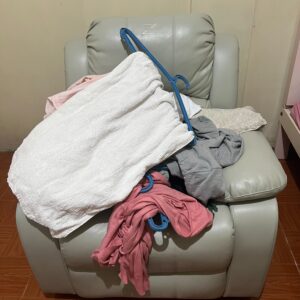
The goal isn’t to wash everything after one wear, but also not to let the chair turn into a second closet with no inventory system.
At the end of the week, see if you bought any laundry products you didn’t actually need, or ran extra cycles that could’ve been skipped. The real savings add up when these small changes become habit.
Frequently Asked Questions
How much should laundry cost per month?
There’s no one-size-fits-all answer. Laundry costs really depend on things like how many people are in your household, how often you do laundry, local utility prices, and whether you have machines at home or visit the laundromat.
A good way to figure it out is to jot down what you spend on detergent, washing, drying, and getting to and from the laundromat for a month. Once you see those numbers, you can build a budget that matches your routine.
How can I save money on laundry detergent?
To save on detergent, start by measuring it as the label suggests and check the cost per load, not just the price tag. Watch for sales on brands you already like. Buying in bulk can be cheaper, but only if you’ll use it up and have space to store it.
Is it cheaper to do laundry at night?
Sometimes it is, especially if your electricity provider offers lower rates at night. If your rates don’t change, though, doing laundry at night won’t cut costs.
Is it cheaper to do laundry on weekends?
Not always. Some plans have special weekend rates, while others charge the same price every day. Best bet: check with your provider before switching up your laundry routine.
When is the best time to do laundry to save money?
If your plan has cheaper off-peak hours, try to do your laundry then. If you’re on a flat-rate plan, focus on saving by using cold water, washing full loads, and air-drying when you can.
How can I save money at a laundromat?
Little things can make a big difference: check prices at different laundromats, bring your own detergent (measured out ahead of time), use the right-sized machine for your load, and air-dry clothes at home when possible. Remember to include what you spend getting there and back, too.
Can I save money by washing clothes less often?
Definitely! Not everything needs a wash after every wear. Jeans, sweaters, and jackets can usually be worn a few times if they’re still clean—just give them a quick airing out. Underwear, socks, and sweaty workout gear should get washed more often, though.
Keep Your Laundry Costs Under Control
Saving money on laundry doesn’t mean building a complicated routine. Begin with a few changes: measure detergent, wash suitable loads in cold water, skip unnecessary products, and air-dry clothes when it makes sense.
Check your pockets before every wash, keep an eye on the dryer lint filter, and don’t let the laundry chair become a permanent fixture in your clothing rotation.
There’s no need to try every tip at once. Pick the changes that fit your household and build from there as you figure out what works best. The missing sock may never return, but your wallet might thank you.