
January shows up every year with big “new era” energy, usually right after December emptied both wallets and willpower. Suddenly everyone is opening banking apps they avoided all holiday season, mentally subtracting food deliveries, online carts that felt justified at the time, and that one purchase no one remembers making.
By the time 2026 rolls around, saving money isn’t about becoming a completely different person with color-coded spreadsheets and monk-level discipline. It’s about small rules, quiet experiments, and oddly specific money-saving challenges that fit into real life, the kind you can follow even when motivation fades sometime between your third coffee and your first forgotten resolution.
These saving challenges don’t ask for perfection or personality changes, just a willingness to notice patterns that have been running the show all along.
The 52-Week Saving Challenge (and the Reverse Version)
This classic challenge quietly tests optimism and consistency. It starts modestly, building each week until the end of the year, often feeling manageable in January but quietly demanding as months go by. The reverse version flips the pressure, starting strong while energy is high and easing off as life gets busier.
How to do it: Deposit $1 in week one, $2 in week two, and $3 in week three, increasing by a dollar each week until week 52. For example, by week 10 you’ll have saved $55, and by the end of the year, it totals $1,378.
For the reverse version, start with $52 and decrease by $1 each week.
The $5 or $10 Bill Stash Challenge
There’s something strangely satisfying about treating physical cash like it doesn’t exist the moment it lands in your hand.
Every $5 or $10 bill goes straight into a drawer, envelope, or forgotten pouch in a bag, untouched and uncounted. It’s the kind of money saving challenge that grows quietly, usually surprising people sometime around midyear when curiosity wins and the stack finally gets counted.
Round-Up and Change Jar Challenge
Small, leftover amounts from daily purchases rarely get noticed, but over time they add up.
Sometimes your bag even starts to feel heavy from all the coins you’ve been stashing without noticing.
Each time you buy something, you can round the total up to the next dollar and drop the extra change into a jar or an app—so if your coffee costs $3.47, that extra $0.53 goes straight into your savings. Loose coins or small cash bills you get back can go in too, adding to the pile without you having to think about it.
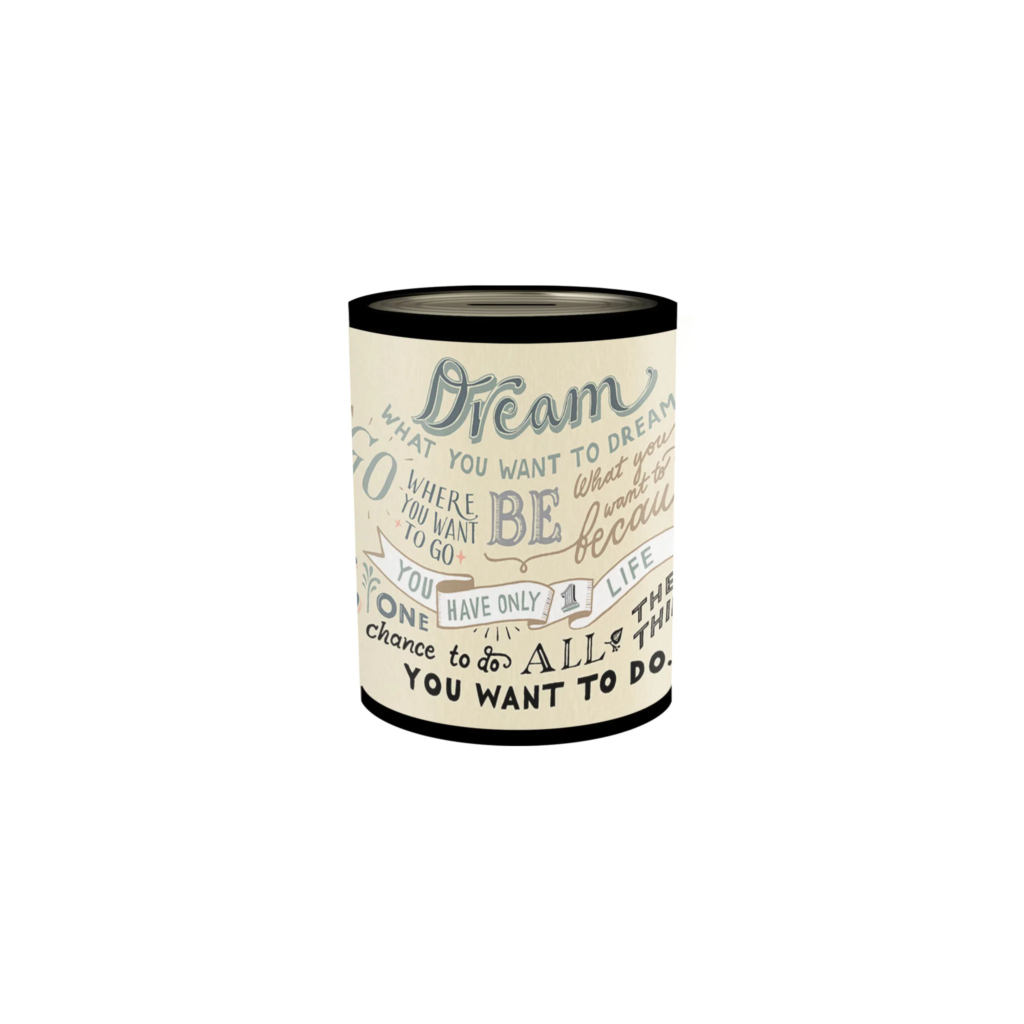
I remember back when I was still a student, I bought a cute coin bank just because I wanted to save my pennies. The design was so charming that I couldn’t bring myself to open it until it was full, which meant I managed to fill it completely—purely because the bank was too cute to break.
It looked exactly like this!
The No-Spend Month (or Very Specific No-Spend Rules)
Instead of cutting everything, the no-spend challenge in 2026 tends to show up with rules that make sense in real life.
- Food comes only from grocery stores, including frozen meals and deli counters.
- Eating out only happens if another person is there.
- Alcohol stays social and never solo.
100 Envelope Savings Challenge
Number 100 envelopes with amounts between $1 and $100. Each day or week, pick an envelope and deposit the exact amount inside.
For example, if you pick $15 on Thursday, tuck $15 into the envelope before doing anything else. Over time, these random deposits quietly add up into a surprisingly hefty stash.
You might also like: How Does Envelope Budgeting Work?
The 48-Hour Holding Period Rule
This one barely feels like a challenge until a cart sits untouched for two days and somehow loses its appeal.
The rule is simple: anything non-essential waits 48 hours before checkout.
Most of the time, the urge fades, screenshots get deleted, and the item never crosses the line from “want” to “owned,” which feels like a small win that doesn’t ask for willpower.
The No-Amazon January Challenge
January already feels slow, which makes it the perfect time to cut off impulse delivery entirely. No scrolling, no late-night ordering, no brown boxes showing up unannounced.
The challenge highlights how often online shopping fills boredom rather than need, especially after the holiday rush has passed and everything feels quiet again.
Saving Your Age Each Week
Saving your age each week turns time into something tangible and slightly playful. It’s a subtle way to mark milestones while keeping a light approach to weekly savings.
Each week, save an amount equal to your age. For example, if you are 28, put $28 aside each week.
The No Coffee or Matcha Challenge
Not forever, just as a temporary experiment that quietly reveals how much of a daily routine runs on autopilot.
Skipping café drinks for a set period, whether that’s a month or a quarter, turns into a moment of awareness every time a familiar order almost gets placed.
For example, if a latte costs $4.50 and you usually buy five a week, you’ll save $22.50 weekly.
The “Didn’t Buy It” List Challenge
Instead of tracking spending, this one tracks restraint. Every time something almost gets purchased and doesn’t, it goes on a list with the price next to it.
Each time you resist buying something, list it with the price. For instance, if you didn’t buy a $35 sweater, write it down. Over time, the list becomes more satisfying than a receipt, filled with moments where money stayed put simply because the pause was enough.
The Grocery-Only Food Challenge
All food comes from a grocery store, no exceptions, whether that’s snacks, ready-to-eat meals, or frozen comfort food.
It removes the gray area around “just this once” spending and replaces it with a clear boundary that still leaves room for convenience, just not delivery apps.
Related: How to Save Money on Groceries
The No-Buy After 7 PM Challenge
Late-night scrolling and tired decision-making often fuel impulse buys. This simple boundary reduces unnecessary purchases while still allowing daytime freedom.
For instance, if you normally buy $15 of snacks at 10 PM for your movie nights, skip it and save that money.
This challenge draws a clean line at a specific time, acknowledging that decision-making looks different at night.
The “Borrow First” Rule
Borrow items whenever possible. For example, borrow a drill from a neighbor, check out a book from the library instead of buying it, or borrow a rarely used kitchen gadget instead of spending $50 on a new one.
Ownership stops being the default solution, especially for items that spend most of their life unused.
The Pantry-Only Week
A week built entirely around what’s already in the kitchen, no grocery runs, no backups, no quick store trips. It turns forgotten ingredients into unexpected meals and reframes food spending as something already done rather than something constantly in progress.
The One-In, One-Out Rule
Every new item replaces something old, whether it’s clothing, beauty products, or random household items.
When buying a new item, remove an old one. For example, buy a $30 jacket and donate or sell an older coat.
It slows down buying without banning it, making space feel intentional rather than cluttered.
The Public Transport and Walking Challenge
For a set period, transportation sticks to public options or walking only. Ride-hailing apps stay closed unless absolutely necessary. It changes how days are planned, how time is perceived, and how often convenience is chosen without thinking.
The Weather Wednesday Challenge
Every Wednesday, the amount saved matches the temperature forecast for the day.
For instance, if it’s 68°F, save $68.
It’s oddly specific, slightly playful, and just unpredictable enough to stay interesting throughout the year, especially when seasons shift and numbers fluctuate without warning.
The Odd, Even, Weekend Saving Challenge
Saving follows the calendar instead of a schedule: $1 on odd days, $2 on even days, and $5 on weekends.
It blends into daily life easily, turning the date into a small reminder without demanding attention.
The No-Convenience Spending Challenge
This challenge focuses on the tiny purchases that exist purely to make life faster: snacks grabbed last minute, fees paid to skip lines, quick fixes that add up quietly.
For instance, if you usually buy a $2 bottled drink at the corner store, refill a water bottle instead.
The Have-Fun-Without-Spending Challenge
This one shows up organically, usually after realizing how many social plans revolve around spending by default.
Free walks, movie nights at home, borrowed books, shared playlists, and long conversations that don’t cost anything. It reframes fun as something already available.
The Takeout Time Window Rule
Takeout is allowed, but only within a specific time frame, turning ordering into a conscious choice rather than an anytime habit.
Pick a time frame, like 11 AM–2 PM, for takeout orders. For instance, skip your usual 9 PM snack delivery and prepare something from home.
The Automatic Raise Challenge
Any increase in income, bonuses, refunds, or extra cash never touches spending first.
For example, if you get a $200 bonus, move it straight into a savings account.
It moves directly into savings before habits have time to adjust. Lifestyle inflation doesn’t get the chance to arrive because the money never sits long enough to feel available.
Turn 2026 into a Year of Smart Savings
By the end of the year, these small experiments quietly leave their mark, with coins jingling in jars, old habits nudged aside, and unexpected savings tucked into accounts. 2026 doesn’t require strict rules or big leaps. It’s about noticing what’s already there and letting small choices add up while life keeps moving.
If you want to keep that momentum going, these simple financial resolutions for better money habits are worth exploring.