Last updated on May 18th, 2026 at 01:16 pm
I’ve always felt lucky to grow up in a family that talked openly about money. We weren’t rich. We were a middle-income family trying to manage things wisely. But money was never confusing or scary in our home. My mom showed me how to count coins. She let me save for things I wanted. She trusted me to handle small amounts on my own. Those early lessons stayed with me.
That’s why the three-jar method makes so much sense to me. It follows the same simple idea I learned as a child: money should have a purpose.
The three-jar money system divides money into three clear jars — Spend, Save, and Give. It’s also called the three-jar budget system or the three-jar allowance system. Many families use it as a starting point for budgeting for kids because it’s easy to see and easy to follow.
Instead of keeping all the money in one place, kids separate it right away. Each jar has a job.
How It Works at Home
Imagine a child sitting at the kitchen table with $10. Three jars are lined up in front of them. They count the money carefully. Then they divide it.
Many families use simple percentages, such as:
- 50% for Spend
- 40% for Save
- 10% for Give
Others split it evenly into three parts. There isn’t one strict rule. The goal is simply to separate the money.
Over time, this routine becomes normal. Money comes in. Money gets divided. The jars slowly fill up.
Spend Jar
The Spend jar is for money that can be used soon.
This is where a child takes money for a small toy, a treat, or something they’ve wanted for a while. When they use money from this jar, they see it leave. The jar gets lighter. The choice feels real.
In save spend give jars, this jar allows kids to enjoy their money without touching their savings.
Save Jar
The Save jar is for bigger goals. It takes time to fill.
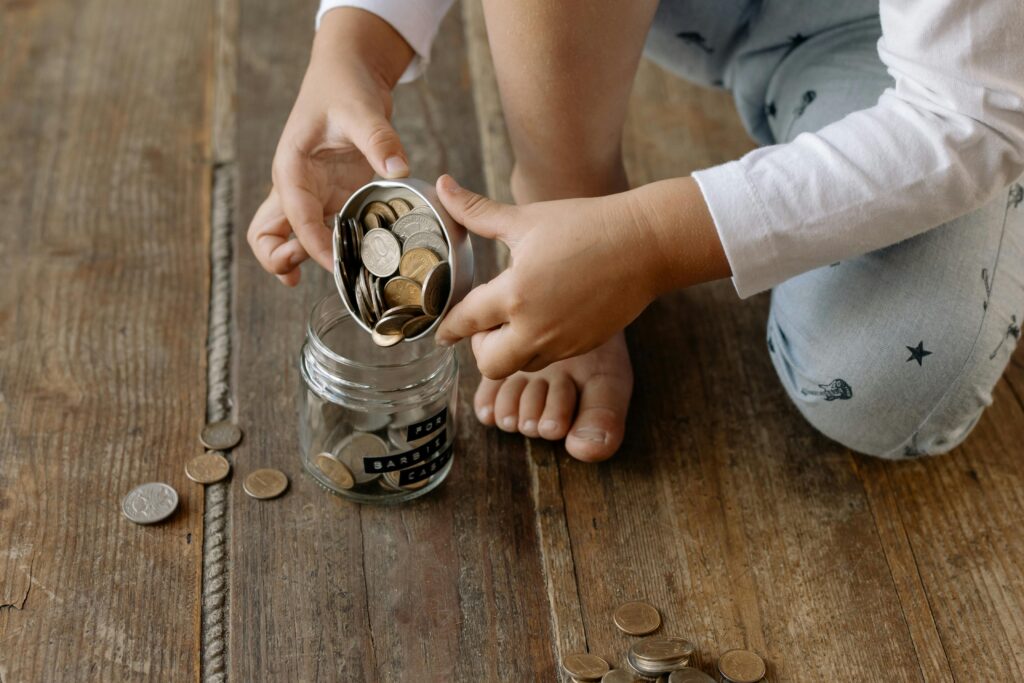
I still remember my first pink piggy bank. I was in kindergarten and wanted boots for a school performance. I would pour the coins onto the floor and count them again and again. Each time, I checked if I was closer to buying those boots.
That was one of my saving lessons. I learned that if I wanted something bigger, I had to wait.
Give Jar
The Give jar is for sharing.
This money might go to a church offering, a small donation, or helping someone in a simple way. In save-spend-give jars, sharing isn’t an afterthought. It’s included from the very beginning.
Children begin to see that money can be used to help others, not just themselves.
💡 If you’re looking to understand budgeting better, take a look at our guides and tools for managing your money.
Explore Budgeting Calculators & GuidesWhy Parents Use the 3-Jar Allowance System
The three-jar allowance system is popular because it’s easy to understand. Kids can see their money. They can touch it. They can count it.
Hands-on money activities for kids often feel more real than long talks about budgeting. The sound of coins dropping into a jar. The habit of counting before spending. The simple act of choosing where each dollar goes.
Through this routine, financial literacy for kids grows naturally.
What You Need to Start
The 3-jar money system doesn’t require much.
You only need:
- Three jars or containers
- Labels: Spend, Save, Give
- A regular allowance or small income
- Simple conversations about what each jar means
That’s it. No apps. No complicated tools.
As Kids Get Older
As children grow, the jar labels can change. Spend might become Fun. Save might turn into Future. The format may shift from jars to envelopes or simple tracking tools, but the idea stays the same.
When the Save jar starts to feel more exciting, families sometimes add small goals or even try fun activities like these money-saving challenges to keep things interesting.
What begins with three simple jars on a table can slowly become a steady habit — one that stays with them long after the jars are gone.