Maybe your bills went up this year, maybe you’re saving for something specific, or maybe your income just isn’t stretching the way it used to. Whatever brought you here, reducing household expenses isn’t about giving up everything you enjoy. It’s about knowing what you’re spending, why you’re spending it, and which costs are actually worth keeping.
Start by Tracing Where Your Money Actually Goes
Before you cut anything, you need to see the full picture. Most people jump straight to canceling one subscription or skipping coffee runs, but that only touches the surface.
The real work starts with tracking every expense for at least one full month, including the small stuff like parking fees and app purchases. Once it’s all laid out, patterns show up that you’d never notice just glancing at your account balance.
This is also where it helps to separate fixed vs variable expenses:
- Fixed expenses stay roughly the same every month. Think rent or mortgage, car payments, and insurance premiums.
- Variable expenses shift depending on your habits and the season. Groceries, entertainment, and utility bills all fall here.
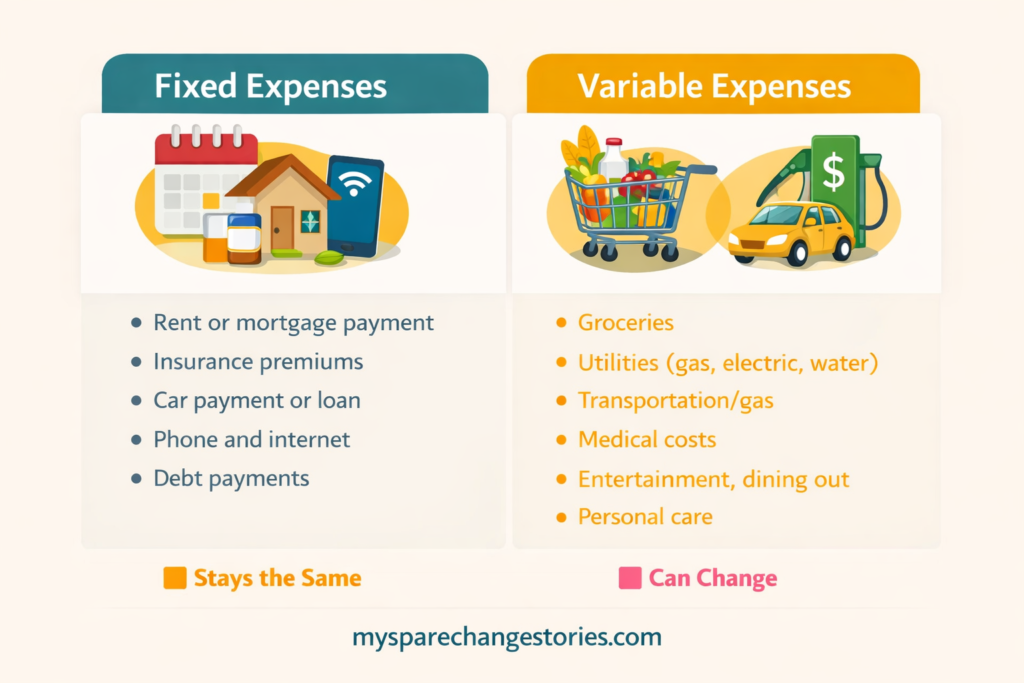
Fixed costs usually need a bigger decision to lower, like refinancing or moving. Variable costs respond to small daily choices, which makes them a good place to start.
You’ll also want to sort spending into essential vs discretionary spending:
- Essentials keep your household running: housing, food, utilities, transportation to work.
- Discretionary spending covers everything else, from dining out to streaming services to that gym membership you renew every January and barely use past February.
Knowing this household budget breakdown gives you a clear starting map instead of a vague sense that you’re spending “too much.”
| Category | Type | Where the money often leaks |
|---|---|---|
| Housing | Fixed | Overpaying for space you don’t use, or missing a refinancing window |
| Utilities | Variable | Heating and cooling habits, old appliances, unused billing plans |
| Groceries | Variable | No plan before shopping, food waste, convenience purchases |
| Subscriptions | Fixed | Forgotten renewals, overlapping streaming services |
| Transportation | Variable | Driving habits, deferred maintenance, unused car ownership |
| Insurance | Fixed | Auto-renewing without shopping around for better rates |
| Debt payments | Fixed | High interest rates that were never renegotiated |
Swipe left or right on the table to see all the columns on smaller screens.
For a longer list of what typically shows up in a monthly budget, this breakdown of common household expenses is a good place to check your own list against.
Housing Costs
For most households, rent or mortgage payments take up the largest single chunk of the budget, which is why reducing housing costs has such a big ripple effect on everything else.
A few ways to actually lower this one:
- Negotiate your renewal instead of accepting the increase automatically. Landlords often have more room than they let on, especially if you’ve paid on time.
- Refinance your mortgage if rates have dropped since you locked yours in, or ask your lender about removing private mortgage insurance once you’ve built enough equity.
- Appeal your property tax assessment if you think your home is overvalued. Many homeowners never bother, and it costs nothing to ask.
- Rent out a spare room or your driveway if that fits your situation and local rules allow it.
If you’re sharing a home with roommates or a partner, splitting costs fairly is its own small project. This guide on splitting bills with roommates breaks down a few ways to divide things so nobody feels like they’re carrying more than their share.
Utility Bills
Utility bills are one of those categories where small, repeatable habits add up over a year in a way that one big gesture never will.
Some habits worth building:
- Lower your thermostat by a couple of degrees in winter and layer up instead. It’s a set-it-and-forget-it change that keeps paying off every month.
- Switch off lights in rooms nobody’s in, swap old bulbs for LEDs, and unplug electronics that draw power even when they’re switched off.
- Run the dishwasher and washing machine only with full loads.
- Check if your area has a deregulated energy market where you can shop around for a cheaper provider.
If your utility provider offers a leveled or averaged payment plan, sometimes called budget billing, it spreads your yearly usage into equal monthly payments instead of hitting you with a huge spike in July or January. It won’t lower what you pay overall, but it makes the bill predictable, which matters just as much when you’re trying to plan a budget.
Water usage is another spot most households overlook, mostly because a dripping tap or a running toilet doesn’t feel urgent enough to fix right away. It should. A slow leak left alone for months adds up to real money, and small habits like shorter showers, running the dishwasher only when full, and fixing leaks and cutting your water bill the moment you spot them go a long way.
Heating and cooling tend to be the biggest swings in a utility bill depending on the season. In summer, that usually means running your AC more efficiently, keeping curtains closed during peak heat, and making sure your unit isn’t working harder than it needs to. In winter, the same logic runs in reverse: sealing drafts and layering up beats cranking the heat, along with a few other energy-saving habits for winter that make a real difference once temperatures drop.
Grocery Spending and Food Costs
Groceries sit in an odd spot because they’re essential, but the amount you spend on them varies wildly depending on planning, not necessity. Two households with identical incomes can have completely different grocery bills based purely on whether they shop with a plan or wing it every time they’re hungry and standing in an aisle.
Tips that make the biggest dent here:
- Meal plan before you shop and check your fridge and pantry first, so you’re not grabbing things you already have.
- Build meals around what’s on sale rather than a rigid menu, and batch cook on a day off to freeze portions for busier nights.
- Buy generic or store-brand versions of pantry staples. The difference in quality is usually smaller than the difference in price.
- Shop with a full stomach, since hungry grocery trips almost always cost more.
- Buy produce that’s in season, since it’s cheaper and usually fresher too.
- Reduce food waste by freezing leftovers and using older ingredients first.
For a deeper look at cutting food costs without eating worse, how to save money on groceries goes through it step by step.
A common question here is how much you should spend on groceries per month, and there isn’t one universal number. It depends on household size, location, and dietary needs. What matters more is comparing your own spending month to month and noticing whether it’s trending up for a reason you can explain, or just creeping without one.
Subscriptions and Recurring Digital Costs
This one is almost embarrassingly common, and I’ll admit I’ve been there myself. I once signed up for a free trial, told myself I’d cancel before it charged me, and then completely forgot until I saw the charge on my statement two months later. Now, whenever I start a free trial, I set a calendar reminder for a day or two before it ends. It takes ten seconds and it’s saved me more than once.
Go through your bank statement and look for every recurring charge, then ask yourself honestly when you last used each one.
Quick wins to look for:
- Streaming services you forgot you had, or ones that overlap with each other.
- App subscriptions that renewed themselves for the third year in a row.
- A gym membership you haven’t visited since spring.
- Software subscriptions with a free or cheaper alternative that does the same job.
Canceling unused subscriptions is one of the fastest wins available because it takes minutes and the savings show up on your very next billing cycle.
While you’re at it, check your phone plan. A lot of people pay for far more data than they actually use every month, and switching to a cheaper plan or carrier can lower that bill without changing how you use your phone at all.
Transportation and Gas Costs
Reducing transportation costs depends a lot on where you live and whether public transit is realistic for your daily routine.
Ways to bring this cost down:
- Swap a few car trips a week for transit, biking, or carpooling if that’s realistic where you live, and combine errands into one trip instead of several short drives.
- Keep up with basic maintenance like tire pressure and regular oil changes, since both improve fuel efficiency.
- Use a gas rewards app or credit card if you drive often.
- Ask whether you actually need every vehicle your household owns. A second car that mostly sits in the driveway still costs you in insurance, registration, and depreciation even when it’s not being driven.
- Look into refinancing your auto loan if your credit has improved since you first financed the car.
Insurance Premiums Are Worth an Annual Check
Insurance is one of those bills people set up once and never revisit, which is exactly why it’s worth revisiting.
A few habits to build into your yearly routine:
- Shop around or simply ask your current provider for a better rate once a year. Rates change and new discounts appear all the time.
- Bundle your home and auto policies with the same provider, which often unlocks a discount.
- Raise your deductible if you have enough saved to cover it, since that usually lowers your premium.
- Review your coverage every year to make sure you’re not paying for protection you no longer need.
This applies to auto, home, and renters insurance alike. A quick call asking whether you qualify for any new discounts costs you nothing and sometimes saves a surprising amount.
Refinancing Debt and Negotiating Bills
If you’re carrying debt with a high interest rate, refinancing debt or consolidating it into a lower rate can lower monthly bills significantly, especially if the original rate was set when your credit situation looked different.
Some options worth looking into:
- Refinance high-interest loans once your credit score improves.
- Look into a balance transfer card if you’re carrying credit card debt, paying attention to any transfer fees first.
- Call your lender directly and ask if there’s a lower rate or hardship program available.
- Make extra payments toward your highest-interest debt first, since that’s where the cost is compounding fastest.
The same negotiating mindset applies more broadly than people realize. You can negotiate bills for internet service, cable, and even some medical bills simply by calling and asking what options are available, especially if you mention you’re considering switching providers. Companies would rather offer a discount than lose a customer, and that leverage is available to you every time you make the call.
Learn a Few Basic DIY Skills
This one surprises people, but picking up a handful of basic home repair skills can save a household hundreds of dollars a year.
Skills worth learning on a free afternoon:
- Installing a dryer vent or duct, or basic electrical fixes like replacing an outlet or light fixture.
- Patching drywall or unclogging a drain.
- Basic sewing and mending instead of replacing clothes at the first small tear.
- Making your own cleaning products from ingredients you already have.
None of these require professional training, yet they get outsourced constantly because they sound more intimidating than they actually are. A few evenings watching tutorials pays for itself the first time you skip calling a technician.
Dining Out and Entertainment
This category is where a lot of quiet spending hides, mostly because each individual purchase feels small. Most people have never actually sat down and worked out how much they should budget for eating out, which is usually why this category creeps up faster than groceries or utilities ever do.
Ways to trim it without cutting it out entirely:
- Set a monthly dining-out budget instead of deciding meal by meal, and look for happy hour pricing or lunch specials instead of full dinner prices.
- Host a potluck with friends instead of going out as a group.
- Use your local library for books, movies, and sometimes even museum passes.
- Check for free community events, outdoor concerts, or local festivals before paying for entertainment.
None of this means cutting fun out of your life completely. It just means being a little more deliberate about it, the same way you’d approach saving money on entertainment in general: pick the few things that matter most to you and let go of the ones you were only doing out of habit.
When There’s Nothing Left to Cut, Look at Income
Cutting costs has a natural limit. At some point, you’ve trimmed the subscriptions, renegotiated the bills, and tightened the grocery budget, and there’s genuinely nothing left to reduce without affecting your quality of life.
When you hit that wall, the more useful move is increasing income rather than squeezing an already lean budget further. That might look like picking up freelance work, selling things you no longer use, or asking for a raise. Cutting costs and growing income work best together, not as competing strategies.
I’ve gone through this process myself, going category by category the way this guide lays it out, and it really did make a difference. I managed to save a lot more than I expected without depriving myself of the things I actually care about.
What Expenses Should I Cut First
With so many categories to look at, it helps to have an order of operations.
- Start with expenses that are both large and easy to change, like unused subscriptions and insurance shopping. These give you quick wins with almost no effort.
- Move next to habits that compound over time, like utility usage and grocery planning.
- Save the bigger structural decisions, like refinancing debt or renegotiating housing, for once you’ve built momentum and have a clearer picture of your full budget breakdown.
Cutting Costs Doesn’t Mean Cutting Out Everything You Enjoy
It’s worth saying plainly: life is still for living. Tracking every expense and tightening your budget doesn’t mean skipping the things that genuinely make your days better.
If you want the dessert once in a while, order it. If your five-year-old tablet finally needs replacing and it’s something you use for a hobby you love, that’s a reasonable purchase, not a failure of discipline.
The goal of reducing household expenses is to spend intentionally, not to spend as little as physically possible on everything all the time. A budget that leaves no room for anything enjoyable rarely lasts, and the households that stick with their savings habits long term are usually the ones who left themselves a little breathing room on purpose.
Where to Go From Here
Treating this as an ongoing habit tends to work better than a single weekend project. Revisit your budget every few months, recheck your insurance rates once a year, and keep an eye on subscriptions before they quietly renew again.
None of these individual steps feel dramatic on their own, but they add up over a year. Start with one category this week, whether that’s tracing your spending for the first time or making one phone call to negotiate a bill, and build from there.