
Looking for ways to save money around the house? Start with the expenses you deal with regularly, such as electricity, water, groceries, laundry, cleaning supplies, subscriptions, and household repairs. You can also save by using what you already own, wasting less food, taking care of your belongings, and thinking twice before buying another item for the home.
You don’t need to change your entire lifestyle to spend less. A few practical habits can make a difference when they’re part of your normal routine. Even something as simple as checking the pantry before grocery shopping or reviewing subscriptions can give you a better idea of where your household money is going.
1. Check Your Recurring Subscriptions
Go through your bank or card statements and look at the subscriptions you currently pay for.
Streaming services, apps, cloud storage, memberships, meal services, and other recurring charges can be easy to forget when each payment is relatively small.
If you rarely use a service, consider cancelling it. You can also check whether you have several services that do similar things.
For example, you might have three streaming subscriptions even though you mainly watch one.
Related post: How to Save Money on Streaming Subscriptions
2. Review Your Internet and Phone Plans
Your internet and phone plans are worth reviewing from time to time.
Check what you’re actually using and compare your current plan with the options available in your area. You may find that you don’t need as much data, speed, or additional features as your current plan provides.
It’s also worth checking whether your provider has introduced new plans since you first signed up.
3. Turn Off Lights in Empty Rooms
It’s easy to leave a light on when you walk out of a room, especially when you’re busy around the house.
Turn off lights when you no longer need them. During the day, open curtains or blinds when natural light is enough.
Keep reading: How to Save on Electricity Bills
4. Use LED Light Bulbs
When you’re replacing an old bulb, consider an LED bulb.
LED bulbs generally use less electricity than incandescent bulbs and have a longer rated lifespan. The actual savings depend on the bulb, how often it’s used, and your local electricity price.
You can also check whether you really need several lights switched on at the same time. Sometimes one light is enough for what you’re doing.
5. Unplug Electronics You Rarely Use
Some electronic devices can continue using electricity while plugged in, even when they’re not actively being used.
Look around your home for electronics that sit unused for long periods.
These might include:
- Spare chargers
- Entertainment equipment
- Small kitchen appliances
- Older electronics
- Computer accessories
- Devices in guest rooms
A power strip can make it easier to turn off several connected devices together.
6. Use Your Air Conditioner Wisely
Air conditioning can be a large household expense in hot climates.
Keep doors and windows closed while the air conditioner is running, clean or replace filters according to the manufacturer’s instructions, and avoid cooling rooms that nobody is using.
You can also choose a comfortable temperature rather than setting the thermostat much colder than necessary.
For more ideas, read how to save money on your AC bill.
7. Make Your Home Easier to Keep Cool
There are simple ways to reduce how much heat enters your home.
Close curtains or blinds when direct sunlight is heating a room. Use fans when they’re appropriate for the conditions, and keep doors closed between rooms when you’re only cooling part of the home.
If outdoor conditions are cooler than indoors, opening windows can also provide ventilation when appropriate.
8. Check Your Heating Habits
If you live somewhere with cold winters, heating can become a major household expense.
Close doors to rooms that don’t need as much heating, use curtains to reduce drafts, and keep heating equipment maintained according to the manufacturer’s instructions.
You can also read these tips to save on energy bills during winter.
9. Look for Drafts Around Doors and Windows
Small gaps around doors and windows can allow outdoor air into your home.
Check for visible gaps, damaged seals, or noticeable drafts.
Weather stripping, caulk, curtains, and other suitable solutions can help depending on the problem and the type of property.
If you’re renting, check your rental agreement before making permanent changes.
10. Fix Leaking Faucets
A dripping faucet is easy to ignore, especially when the leak is small.
However, water is still being used even though you’re not getting anything useful from it.
Check faucets, showerheads, toilets, pipes, and other accessible plumbing fixtures for leaks. For complicated plumbing problems, use a qualified professional.
Need more advice like this? Read: How to Save Money on Water Bill
11. Turn Off the Tap While Brushing Your Teeth
There’s no need to keep the water running while you’re brushing your teeth.
Turn off the tap while brushing and turn it back on when you need to rinse.
The same idea applies to other household tasks. If you’re doing something that doesn’t require running water, turn the tap off.
12. Take Shorter Showers
Long showers use more water than shorter showers.
You don’t need to make every shower a race. Simply being aware of how long you spend in the shower can help you use less water.
A water-efficient showerhead can also reduce water flow while still providing a comfortable shower.
13. Run Suitable Full Loads of Laundry
Try to match your laundry loads to the capacity of your washing machine.
Running several small loads when one suitable full load would work means using the machine more often.
At the same time, avoid overloading the machine. Clothes need enough space to move properly during the wash.
14. Wash Clothes With Cold Water When Appropriate
Many clothes can be washed with cold water.
Using cold water can reduce the energy needed to heat water, particularly with machines that heat their own water.
Check the care label on your clothing and the instructions for your detergent before choosing a wash temperature.
15. Line-Dry Your Clothing
When the weather and your living space allow it, line-drying your clothes can reduce your use of an electric or gas dryer.
A clothesline, drying rack, balcony rack, or suitable outdoor space can work depending on your home and climate.
If you need to dry clothes indoors, give them enough space and ventilation so excess moisture doesn’t build up.
Need More Ways to Save?
Find money-saving ideas, challenges, and useful tools that can fit different budgets and goals.
See More Saving Ideas →16. Clean Your Washing Machine
Your washing machine needs care too.
Follow the manufacturer’s instructions for cleaning the drum, filters, detergent drawer, and other parts that require maintenance.
Regular cleaning can also help prevent unpleasant smells and residue from building up inside the machine.
17. Use the Right Amount of Laundry Detergent
More detergent doesn’t automatically mean cleaner clothes.
Check the product instructions and use the recommended amount for your load size and washing conditions.
Using more detergent than necessary can also mean going through your supply faster.
18. Plan Your Grocery Shopping
Food is one of the household expenses that comes up regularly, so it’s a useful place to review your spending.
Before shopping, check your refrigerator, freezer, and pantry.
Make a simple list based on what you already have and what you actually plan to eat.
For more ideas, read how to save money on groceries.
19. Use Food Before It Goes Bad
Move food that needs to be eaten soon to a visible part of your refrigerator.
Leftover chicken, vegetables, fruit, cooked meals, and opened ingredients can easily get forgotten when they’re pushed behind newer groceries.
You can create a small “eat first” area so these foods are easier to notice.
20. Freeze Food You Won’t Eat Soon
Freezing can extend the storage life of many foods.
Bread, cooked meals, certain fruits and vegetables, meat, and other suitable foods can be frozen when stored properly.
Divide larger portions into smaller containers when practical so you can thaw only what you need.
21. Use Leftovers for Another Meal
Leftovers don’t have to mean eating the exact same meal again.
Cooked chicken can become part of a sandwich, soup, or wrap. Roasted vegetables can go into another meal. Cooked rice can be used in another dish.
This can also make busy days easier because part of the meal is already prepared.
22. Check Your Pantry Before Grocery Shopping
Take a quick look through your pantry before heading to the store.
You may already have pasta, rice, canned food, spices, sauces, snacks, or other ingredients you were about to buy again.
A pantry check can be especially useful when items are stored behind other products.
23. Compare Unit Prices
Don’t look only at the package price.
Check the price per kilogram, litre, gram, ounce, roll, sheet, or another relevant unit when the information is available.
For example, a $10 package isn’t automatically cheaper than a $14 package if the $14 package contains considerably more product.
Unit pricing is particularly useful for groceries, toilet paper, laundry detergent, cleaning products, and household staples.
24. Try Store Brands
Store-brand or generic products can cost less than name-brand alternatives.
Compare the ingredients, size, quality, and unit price rather than choosing based only on the brand name.
There’s also another reason people prefer store brands. I’ve read people say that having a store-brand option they already like removes the need to decide which brand to buy every time they shop. Once they know which basic product works for their household, they can simply pick it up and move on.
For everyday household products, that can make shopping a little simpler too.
25. Buy in Bulk When You’ll Actually Use It
Buying larger quantities can make sense for products you use regularly.
Rice, pasta, cleaning products, toilet paper, laundry supplies, and other long-lasting items may work well for bulk purchases depending on the unit price and your storage space.
Avoid buying a large quantity simply because the package looks like a bargain. A discount doesn’t help much if the product expires, gets damaged, or sits unused.
26. Keep Reusable Cleaning Cloths
Washable cleaning cloths can replace many disposable paper towels for everyday cleaning.
Old towels, worn cotton clothing, and purpose-made cleaning cloths can work for different household tasks when they’re clean and suitable for the job.
Keep separate cloths for tasks where hygiene requires it, such as cleaning bathrooms or areas used for preparing raw food.
27. Use Cleaning Products According to Their Instructions
Check the label before using a cleaning product.
Concentrated products may have specific dilution instructions, while other products have recommended amounts for different surfaces or tasks.
Using more product than directed can mean going through bottles faster without providing a better result.
Never mix cleaning chemicals unless the product instructions specifically say that they can be safely combined.
28. Reuse Suitable Containers
Before buying another storage container, look at what you already have.
Glass jars, food containers, boxes, and other suitable items can be useful for storing leftovers, pantry ingredients, craft supplies, or small household items.
Make sure containers are clean and appropriate for their intended use.
29. Repair Items Before Replacing Them
A broken item doesn’t always need to go straight into the trash.
A loose screw, damaged handle, missing button, worn seal, or another minor issue may be repairable.
You can learn to handle straightforward DIY repairs if you’re confident enough to do the work safely and understand what the repair involves.
For tricky repairs, leave the job to a qualified professional. Electrical work, gas systems, major plumbing, structural repairs, and complicated mechanical work aren’t good places to experiment just to save money.
A DIY repair also isn’t a good idea when you’re unsure about the instructions, don’t have the right tools, or don’t feel confident doing the work safely.
30. Maintain Your Appliances
Appliances cost money to replace, so regular maintenance is worth keeping up with.
Clean filters, vents, seals, trays, and other parts according to the manufacturer’s instructions. Don’t ignore unusual noises, leaks, error messages, or other problems that need attention.
Maintenance is generally cheaper than repair, especially when a simple maintenance task can keep an item working as intended.
If you’re comfortable doing basic maintenance yourself, follow the manufacturer’s instructions carefully. For complicated work or anything involving electricity, gas, or specialized components, leave it to a qualified professional.
31. Clean Refrigerator Coils and Vents When Required
Some refrigerators have coils or vents that require cleaning as part of routine maintenance.
Check your refrigerator’s manual first because designs differ.
If the manufacturer recommends cleaning a particular component, follow those instructions instead of taking the appliance apart unnecessarily.
32. Keep Your Freezer Organized
An organized freezer makes it easier to see what you already have.
Label containers with the food and date when useful, and keep older items visible so they don’t disappear behind newer purchases.
A freezer full of mystery containers isn’t very helpful when you’re deciding what to cook.
33. Use a Shopping List for Household Supplies
Make a list before buying cleaning products, toiletries, laundry supplies, and other household essentials.
If you already have two bottles of dish soap at home, another one probably doesn’t need to come home with you just because it’s on sale.
34. Create a “Use What You Have” Rule
Before buying something for your home, check whether you already own an item that can do the job.
This applies to:
- Kitchen equipment
- Storage containers
- Cleaning supplies
- Tools
- Office supplies
- Decorations
- Clothing
- Furniture
You may already have a perfectly usable option hiding in a cupboard.
35. Borrow Items You Rarely Need
Some household items are used only a few times each year.
A ladder, specialty tool, carpet cleaner, camping item, or other occasional-use product may not need to become a permanent part of your home.
Depending on your community, you may be able to borrow from family, friends, neighbours, or a local tool-lending service.
36. Buy Secondhand When It Makes Sense
Secondhand furniture, tools, books, clothing, kitchen equipment, and other household items can cost much less than buying new.
Facebook Marketplace, local buy-and-sell groups, thrift stores, and garage sales can be good places to look. University areas are also worth checking. Students often sell or give away furniture, small appliances, desks, chairs, and kitchen items when they graduate or move.
Before buying, check the item’s condition and make sure it works as expected. Ask about damage, missing parts, age, and any issues you should know about.
Be more careful with secondhand electrical equipment, child-related products, mattresses, and other safety-sensitive items. Check current safety information and recalls where relevant, and avoid anything you cannot verify is safe and in good condition.
Also consider delivery or transportation costs. A cheap secondhand item may not be a good deal if getting it home costs more than expected.
37. Sell Items You No Longer Use
Look through closets, storage areas, garages, and spare rooms.
You may find furniture, electronics, clothing, kitchen equipment, books, tools, or other items that you no longer need.
Selling usable items can turn unwanted belongings into extra money. Donating items that aren’t worth selling can also free up space without adding another purchase to your budget.
38. Don’t Buy Storage for Things You Don’t Need
Storage containers can solve a real problem, but they can also become a reason to keep more things than you actually use.
I learned this one myself. I bought a lot of storage boxes because I thought they would help me organize everything. Instead, I ended up using a lot of storage space just to store the things I had accumulated.
Then I had another problem. I had already bought the storage boxes, so I wanted to use them instead of letting them sit empty. That made it easier to keep things I probably didn’t need simply because I had a box available for them.
Before long, I was buying and keeping more stuff just to fill the storage and make sure the boxes weren’t going to waste.
Now, I think about the things first and the storage second. If something isn’t useful enough to keep, putting it into a nicer box doesn’t solve the problem.
Before buying another basket, box, shelf, or organizer, look at what you’re actually storing. If you already have several boxes filled with things you rarely use, another container may simply give those things another place to sit.
39. Use Curtains and Blinds Strategically
Window coverings can help manage sunlight and indoor temperatures.
Close them when direct sunlight is heating the room, and open them when natural light is useful.
The best approach depends on your climate, window direction, and type of curtains or blinds.
40. Check Buy Nothing Groups
Before throwing something away, check whether someone in your area might want it. Buy Nothing groups and local community groups are often used to give away things people no longer need.
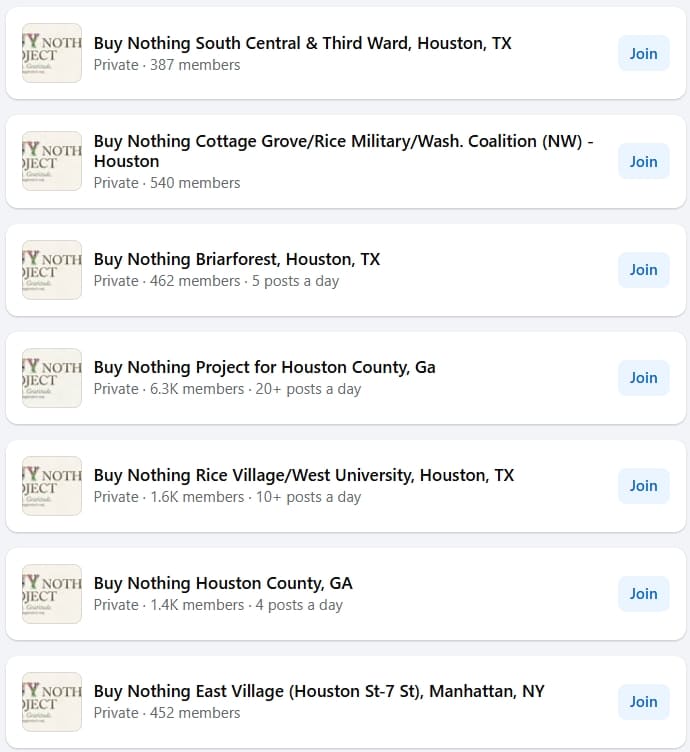
You may find useful household items there too, such as extra dishes, plant pots, storage baskets, moving boxes, or small pieces of furniture. What looks like clutter in one home could be useful to someone nearby.
These groups can also be useful when you’re clearing out your own home. Instead of keeping something you no longer use, you can offer it to someone who needs it.
41. Cook More Than One Portion
Cooking extra portions can make future meals easier.
You can refrigerate suitable leftovers for another meal or freeze portions for later.
This can also make better use of ingredients that might otherwise sit unused in the refrigerator.
42. Drink More Water From Home
If safe drinking water is available at home, carrying a reusable bottle can reduce the need to buy individual bottled drinks.
A reusable bottle can also be useful for work, school, errands, travel, and outdoor activities.
43. Make Coffee and Tea at Home
Buying coffee or tea outside the home can become a regular expense.
Making your drink at home can cost less per serving, particularly when you already have the equipment and ingredients.
You can still buy your favorite drink when you want one. The idea is simply to make it a choice rather than an automatic daily purchase.
44. Plan Errands Together
If you have several errands to run, consider grouping nearby stops into one trip.
A grocery trip, pharmacy visit, parcel drop-off, and other errands may fit into the same outing depending on your location and schedule.
This can also make your week easier to organize.
45. Take Care of Your Clothing
Follow the care instructions on your clothes and avoid washing items more often than necessary when they don’t need it.
When possible, line-dry your clothing instead of putting everything in a dryer.
Repair small problems such as loose buttons or minor tears when practical. Store clothing properly and follow the care label for washing and drying.
46. Look After Your Shoes
Clean shoes according to their material, allow them to dry properly, and store them in a suitable place.
If a pair has minor damage, check whether it can be repaired before replacing it.
A worn sole, loose stitching, or damaged fastening doesn’t necessarily mean the entire shoe needs to be thrown away.
47. Grow Herbs at Home
If you have suitable space and a climate that supports it, growing a few herbs can be a simple addition to your kitchen.
Basil, mint, parsley, green onions, and other herbs can grow in containers depending on the conditions.
You don’t need a large garden. A few pots may be enough.
48. Cook Simple Meals at Home
Cooking at home gives you more control over ingredients, portions, and how often you eat out.
Simple meals such as soups, rice dishes, pasta, sandwiches, roasted vegetables, eggs, and homemade snacks can be built around ingredients you already have.
You don’t need complicated recipes for a meal to be satisfying.
49. Have Low-Cost Entertainment at Home
Entertainment doesn’t have to involve spending money every time you have free time.
A movie night, board game, home-cooked dinner, reading, gardening, baking, or a walk can all be inexpensive ways to spend an evening.
Keeping a few low-cost activities in mind can make it easier to stay home when you don’t have anything planned.
50. Check Your Household Spending Once a Month
Take a quick look at your recent spending.
You can group purchases into broad categories such as:
You don’t need a complicated spreadsheet. Even a basic review can show you where your household money is going.
51. Keep a List of Household Items You Need
Instead of buying things as soon as you notice they’re running low, keep a running list.
When you need to shop, check the list and buy the items that actually need replacing.
This can work well for cleaning products, toiletries, pantry staples, batteries, light bulbs, and other household essentials.
52. Wait Before Buying Nonessential Household Items
A new kitchen gadget, decoration, organizer, appliance, or piece of furniture can look useful when you’re browsing.
Give yourself time before buying it.
Think about where you’ll store it, how often you’ll use it, and whether you already own something that can do the same job.
53. Compare Repair and Replacement Costs
When something breaks, look at both options before buying a replacement.
For example, repairing a small appliance may make sense when the repair is straightforward and the appliance is otherwise in good condition. Replacing it may make more sense when the item is old, unreliable, or expensive to repair.
If the repair is simple and you’re confident you can do it safely, DIY may be an option.
For tricky repairs, leave the job to a qualified professional. A repair involving electricity, gas, structural components, or complicated mechanical parts isn’t worth attempting if you don’t have the knowledge and confidence to do it safely.
54. Maintain Your Home Regularly
Regular household maintenance covers many small tasks that are easy to put off.
Clean filters, check for leaks, inspect seals, clean appliances, clear suitable drains and gutters where applicable, and deal with minor problems before they become larger household projects.
Maintenance is generally cheaper than repair. A simple cleaning, inspection, or routine maintenance task can be much easier to deal with than waiting until something breaks.
You can handle straightforward maintenance yourself as long as you’re confident that you understand the task and can do it safely. If the job involves electricity, gas, structural components, major plumbing, or anything you’re uncomfortable handling, leave it to a qualified professional.
55. Avoid Upgrading Things That Still Work
A working appliance, phone, piece of furniture, or kitchen tool doesn’t automatically need to be replaced because a newer model exists.
If the item still meets your needs, keeping it is a reasonable option.
Regular maintenance also matters. Cleaning, inspecting, and caring for an item can keep you using it for longer.
56. Keep Your Home Organized Enough to See What You Own
You don’t need a picture-perfect home.
You simply need to be able to find the things you already own.
When household supplies are easy to see, it’s easier to notice that you already have detergent, batteries, toiletries, pantry food, or cleaning products before buying more.
57. Use a “Finish It First” Approach
Before opening a new bottle, box, or package, check whether you already have one in use.
This works particularly well for shampoo, soap, cleaning products, condiments, pantry items, and other products that tend to accumulate.
One open bottle is easier to manage than five half-used bottles.
58. Be Careful With Sale Prices
A discount only saves money when you actually needed the item.
A $20 item marked down to $15 still costs $15.
Before buying something on sale, ask whether it was already on your shopping list and whether you’ll actually use it.
This is particularly useful for household products that can slowly pile up in cupboards.
59. Make Household Shopping More Intentional
Keep household shopping focused on what you actually need.
If you need laundry detergent, buy laundry detergent. You don’t necessarily need a new candle, storage basket, mug, blanket, or kitchen gadget just because you saw it while shopping.
A clear list makes it easier to remember what you came for.
60. Give Yourself a Household Savings Target
Choose a realistic amount you’d like to free up from household spending each month.
For example, you might aim to reduce unnecessary household spending by $25, $50, or $100.
Then look at your recurring expenses, grocery habits, utility use, and household purchases to see where that amount could come from.
The target can be small. You can spread it across several ordinary household expenses rather than looking for one dramatic cut.
Which Household Expenses Should You Look at First?
If 60 ideas feel like a lot, you don’t need to tackle them all at once.
Start by looking at expenses that appear regularly:
- Electricity and heating or cooling
- Water
- Groceries
- Subscriptions
- Household supplies
- Laundry
- Repairs and maintenance
- Eating and drinking outside the home
Then look at purchases that happen because something was forgotten, wasted, duplicated, or replaced too soon.
For example, if food keeps getting thrown away, the issue may be less about finding cheaper groceries and more about buying amounts that your household can actually use.
Make Your Home Work Better for Your Budget
Saving money around the house doesn’t have to mean making your home uncomfortable or giving up everything you enjoy.
It can be as simple as using what you already have, checking your bills, taking care of your belongings, wasting less food, and paying attention to the purchases that happen repeatedly.
A home has plenty of small expenses hiding in plain sight. The pantry has forgotten groceries, the bathroom has a dripping faucet, the cupboard has three bottles of half-used cleaner, and the storage room has a box inside another box that nobody remembers buying.
You don’t need to fix everything at once. Start by noticing where your household money is going, then keep the changes that fit naturally into your everyday life.