

If you want to save money when moving, let’s start with three choices that make the biggest difference: how you’ll move, which day you’ll move, and how much you’ll bring. Get these right, and you’ll save yourself a lot of stress (and money) before you so much as run out of tape for the first time. It always happens.
Before you make your first checklist, it’s smart to think ahead about how much you’ll actually need to save up, since deposits, moving supplies, transportation, and those little surprise expenses add up faster than you’d expect, and a realistic number for how much money to save before moving out keeps them from landing all at once.
Moving has a way of piling on little costs you don’t see coming, so the final total can feel like a surprise party nobody asked for. This guide starts with the big-picture choices that make the most impact and heads down to smaller tricks. It’s kind of like unpacking, but less likely to end in finding last year’s Halloween candy. Skip around to the parts you need (no judgment if you just want the quick wins!)
Start With the Three Decisions That Set the Price
Every moving quote is basically a recipe with three main ingredients: method, date, and how much stuff you’re hauling. Movers will look at the size or weight of your load and the time it takes, while a DIY move means you’re paying for truck size, fuel, and likely spending a full Saturday on the job. Choosing these three things early is like picking your destination before you even buy a plane ticket. Packing tape and bubble wrap? Tiny potatoes compared to these big choices.
Compare DIY, Container, and Hired Movers
Each choice here is a trade-off between money, effort, and how much risk you’re willing to take (and, let’s be honest, how many friends you still have after asking them to lift a couch). The right answer depends on things like distance, how much furniture you’ve got, and whether you’re moving across town or across the country. Prices bounce around faster than a dropped box of kitchenware. Getting a few real quotes for your route is worth way more than any online estimate.
Pick a Cheaper Day to Move
One simple trick for saving money: try not to move on the busiest days. Movers and truck rentals get swamped at the end of the month, on weekends, and when the weather is nice—basically, when everyone else is moving. If you can swing a mid-month weekday, you’ll often find better rates and more choices. It depends on your city, but it never hurts to ask if a different date will save you money. If your lease is flexible, a quick, polite email to your landlord can open up cheaper options without much effort.
Need More Ways to Save?
Find money-saving ideas, challenges, and useful tools that can fit different budgets and goals.
See More Saving Ideas →Declutter a Month Before You Start Packing
Moving is like throwing your entire life into the spotlight, usually in a hallway right next to that box you haven’t opened since your last move. Since movers charge by volume or weight, the less you bring, the less you pay. About a month before packing, a ruthless decluttering session pays off. For example, selling a sofa and a bookshelf for $100 each means $200 toward moving costs and two fewer things to lug down the stairs (your back will thank you, and so will your friends). Plus, it’s the perfect excuse to finally toss that drawer full of mystery cables. No, that old phone charger will not come in handy someday.
Get Free Boxes and Packing Supplies
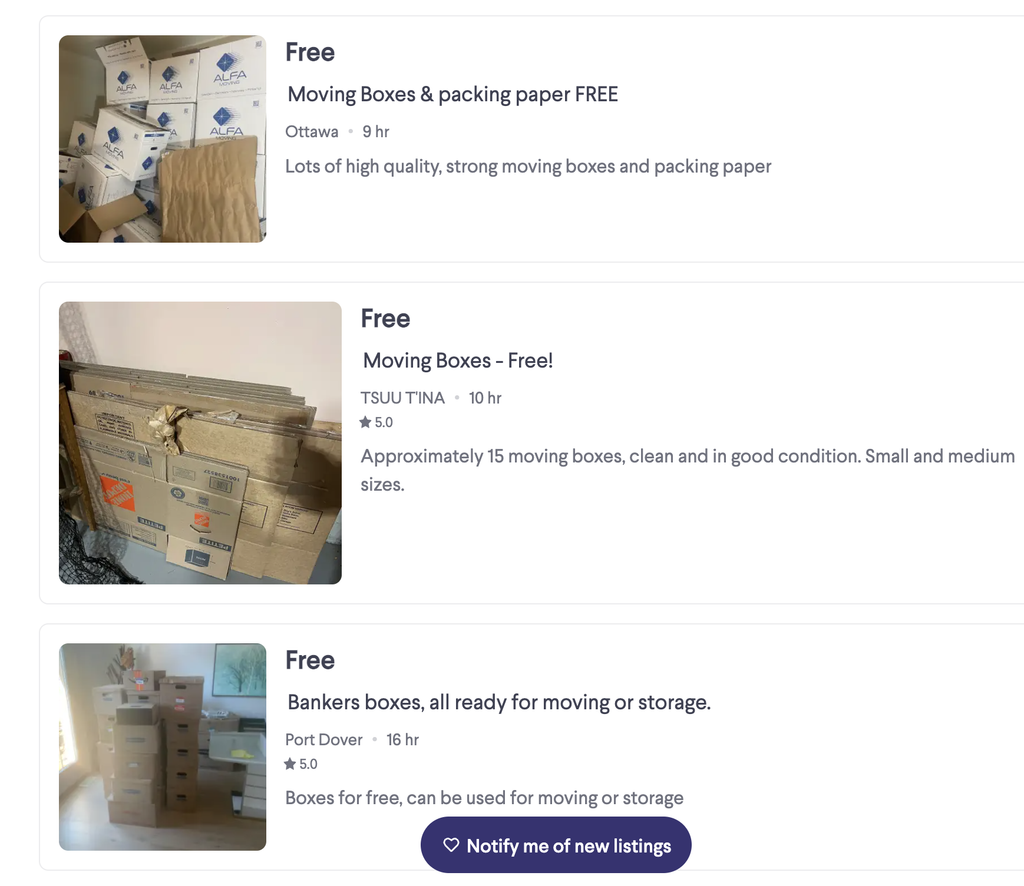
Free moving boxes are easier to find than most people think, and the best spots are probably places you already visit every week. Grocery stores and liquor stores almost always have sturdy boxes, and those banana boxes are often the gold standard: strong, handles built in, and almost suspiciously roomy. Pharmacies and hardware stores are also worth a quick ask. Friends or neighbors who just moved are usually thrilled to pass boxes along (so they don’t have to store them for the next five years). Here are a few of the best sources:
- Your local Buy Nothing group, if there’s one in your area
- Nextdoor and Craigslist listings for free boxes
- Freecycle.org, and Kijiji.ca if you’re in Canada
- Grocery, liquor, pharmacy, and hardware stores
Pack Breakables in the Linens You Already Own
Here’s a classic packing hack: use your own towels, dish cloths, and bedsheets instead of bubble wrap. They’re coming along for the ride anyway, so why not put them to work? Layer plates with dish towels, tuck glasses inside rolled-up socks, and wrap wall art in a bedsheet (packing tape keeps it all snug). Newspaper fills in the gaps, but be ready for a little ink on your hands, so save it for things headed straight to the sink. This trick not only saves money, but also means you’ll pack fewer boxes since the linens need a box anyway. It’s a win-win, unless you were looking forward to buying bubble wrap for fun.
Furnish the New Place Secondhand
Furnishing a new place can be a budget buster, but buying secondhand is a great way to save money. Local Facebook groups, marketplace pages, thrift shops, and estate sales are excellent places to find deals on everything from dishes to lamps. Keep a running list of what you actually need on your phone to avoid getting sidetracked by every $8 lamp you come across. Remember, just because something is new to you doesn’t mean it has to be new from the store.
Get Moving Quotes the Smart Way
Quotes are far easier to compare when each company hears the same story, so a written inventory of what you’re moving, the floors involved, and any stairs or long carries is worth preparing before the first call. A binding estimate sets a fixed price for the listed items, while a non-binding estimate can change on the day, so it helps to ask which one you’re getting and what could change the number. Recent reviews, the company’s license and insurance in your country, and questions about minimum hours or fuel charges can keep a surprise from arriving with the invoice.
Watch for Hidden Moving Costs
The truck or the movers get most of the planning attention, and the smaller costs tend to show up with very little warning. It’s kind of like relatives at a wedding or that one friend who always brings a plus-one. These are the ones worth putting on a list early:
- Overlapping rent or mortgage when you hold both places for a few days
- Security deposits at the new place
- Utility and internet setup fees
- Cleaning at the old place, which can affect your deposit refund
- Parking permits or elevator reservations for moving day
- Tips and meals for helpers
- Insurance or valuation coverage for your belongings
Jotting these down ahead of time helps avoid that classic moving-day surprise when the bill shows up higher than planned. A little list now means less sticker shock later.
Check for Tax Deductions and Employer Help
Certain countries allow moving expenses to be deducted in specific situations, and employers sometimes offer relocation support when a move is for work. The rules differ by country and by circumstance and they change over time, so your tax agency’s official website is the place to confirm what applies to you. When the move is for a job, asking HR about relocation support before accepting the offer or signing the lease keeps that door open, and it’s a much easier conversation before the paperwork than after.
Save Money While Moving on a Tight Budget
If you’re moving on a shoestring, it helps to have a game plan. Selling the big stuff first can bring in quick cash, free boxes and linens keep supply costs down, and asking if a weekday move gets a better rate never hurts. Secondhand furniture is a real budget saver for the new place. And don’t underestimate the power of friends and family. A few pizzas and a heartfelt thanks can go a long way (especially if someone’s carrying that sleeper sofa; extra cheese recommended). For small apartments with extra time, a few trips in a borrowed car might even beat paying for a truck rental altogether.
A Simple Moving Timeline
Spreading out the moving work—and the expenses—over a few weeks makes the whole process less overwhelming and a lot less painful on the wallet. Here’s one example of a simple moving timeline:
- 6 to 8 weeks out: Set a budget, start decluttering, and collect quotes
- 4 weeks out: Sell larger items, book movers or a truck, and start gathering free boxes
- 2 weeks out: Pack rooms you rarely use, confirm utility transfers, and update your address
- 1 week out: Pack linens last, clean, and confirm times with everyone helping
- Moving day: Keep your must-haves—documents, meds, chargers, and a bit of cash—in a bag you personally carry. Phone chargers have a way of disappearing into random boxes, so keeping essentials within arm’s reach saves stress later.
Before You Tape the Last Box
A little planning upfront goes a long way. Those three big decisions and a pile of free banana boxes can make a bigger dent in your final moving total than you might expect. Keeping a quick list of what’s coming, choosing a date that fits your budget, and making sure all the little fees are covered gives you the numbers you need—even if your place looks like a storage unit exploded.