

If you want your kid to actually save up for something (instead of watching birthday money vanish into a candy-fueled blur), here’s a trick: help them pick one thing they really want, figure out the exact price, and chop that number into snack-sized weekly pieces. Suddenly, a $60 game isn’t Everest. It’s just $5 a week for three months, which even the most impatient kid can wrap their head around. I’ve got you below with age-by-age tips, ideas for where kids’ money can come from, and the sneaky tricks that keep savings from pulling a disappearing act. All written for you, the parent at the helm.
If you’re here, you probably just want a plan you can actually explain at the kitchen table, no finance degree or flowcharts required. Each section below is built for skimming, trying something out this week, and circling back when you’re ready for the next step. No pressure, just progress. And if you want to skip ahead or come back later, I won’t tell anyone.
The quick version
- Let your child choose one goal and write down its exact price.
- Divide the price by a weekly amount to get a timeline.
- Set the saving part aside first, before anything gets spent.
- Keep the money out of easy reach and track it where your child can see it.
Why Saving Habits Start Small
Kids don’t need to know about interest or investing to start saving. The basic idea is simple: put money aside for something they want, and that’s enough to get rolling. Early habits like waiting for a purchase and watching a balance grow give them practice for the bigger money stuff that comes later. Whether it’s a piggy bank at age 4 or a savings account at age 12, the logic is the same, just with fancier tools.
Start With One Goal and a Price Tag
The simplest way for a kid to start saving is with a jar, a goal, and a first dollar. The goal comes first, because saving is way easier to picture when it has a name. Ask your child what they want most right now: a video game, a bike, a day out with friends, or maybe a gift for a sibling. Have them write down or draw the item with its exact price. ‘A new bike’ is tough to count toward, but ‘$120’ is a number they can actually chip away at. Short-term goals like a toy and long-term dreams like a car or college can all go on the same list. And if your kid has two wishes, the cheaper one makes a great first target, since they’ll get there faster.
Work Out the Timeline Together
The math here is just one division problem: price divided by weekly amount equals number of weeks. Working it out together makes the wait feel real, and the table below gives you a few dollar examples to compare with your own kid’s goal. There’s no magic number for how much to save each week. It all depends on what’s coming in. Some families put $5 aside from a $10 allowance, but you get to pick what fits your crew.
Weeks = goal price divided by the amount saved each week.
The highlighted row is the $60 game from the start of this guide, and the $100 rows show how doubling the weekly amount cuts the wait in half.
Match the Tools to Your Child’s Age
Age changes which tools make sense far more than it changes the idea itself, and the age bands below follow the stages that banks and credit unions commonly use in their kids’ money guides. They’re starting points, and your child’s own pace matters more than the number on the birthday cake.
Use these as a loose guide and adjust for your own child.
Ages 3 to 7
A clear jar or a piggy bank with a removable lid lets little kids watch the money pile up, and celebrating when it’s half full gives them something to look forward to. Sorting coins together and playing pretend store teaches coin values, and everyday moments like grocery shopping show how money gets used. Phrases like ‘we’re saving for it’ or ‘we need to wait until we have enough’ plant the idea that not everything gets bought right away.
Ages 8 to 12
This is the age when an allowance starts to make sense, since children can handle a few more ideas like budgeting and written goals. Tracking where the allowance goes in a notebook or a simple app shows them how far a few dollars stretch, and a conversation about needs versus wants helps sort a purchase before it happens. A savings account opened with you also fits this age, and I’ve covered how to start the teaching side in my guide to teaching kids about money.
Ages 13 to 18
Teenagers want independence, so this is the stage where your role shifts from managing the money to just checking in. A part-time job, babysitting, or mowing lawns brings in income, and looking over the first paycheck together explains deductions, which change depending on where you live. The section on how to save money as a teenager further down covers the rest.
Help Your Child Find Money to Save
A kid without an allowance can still save, since birthday money, holiday gifts, and small jobs for neighbors all count as income. Even a few dollars a month goes further when it’s aimed at one named goal. Here are ways for kids to save money by bringing a little more in, and a 10 year old can usually handle most of the ones near the top:
- Extra chores around the house, like tidying rooms, organizing toys, or helping with laundry
- Pet sitting or watering a neighbor’s plants
- Yard work such as raking leaves or shoveling snow, where the season allows
- A lemonade stand, a bake sale, or handmade crafts sold to family and friends
- Tech help for relatives, like setting up a device or sorting photos
- Homework help for younger students, for kids who are strong in a subject
- Selling outgrown toys, books, or clothes
Anything online runs through you, since a grown-up needs to handle accounts, payments, and keep an eye on who your child is talking to.
Need More Ways to Save?
Find money-saving ideas, challenges, and useful tools that can fit different budgets and goals.
See More Saving Ideas →Try the Three Jar Method
The three jar method splits money into Save, Spend, and Share, so every coin has a job before it lands anywhere. Saving is for bigger goals like a bike or electronics, Spending covers short-term fun, and Sharing is for charity or helping someone in need. A $10 allowance could be split $5, $3, and $2, and the exact split is totally up to your family. My guide to the three jar method for budgeting with kids walks through the setup.
Pay Savings First
When money shows up, the saving part goes into the jar first, so the leftover money is the only money in play for spending. With that $10 allowance, the $5 for the goal goes in first and the rest is your child’s to enjoy. Lots of parents also offer a match, like adding 50 cents for every $1 their child saves, which gives the goal a little boost, kind of like an employer match at work.
Open a Kids’ Savings Account
Kids can open a savings account in many countries as long as a parent or guardian is the main or joint holder. Around age 8 to 12, lots of kids are ready to see how a bank works, and a youth savings account lets them watch the balance grow and connect the effort they put in with the money they see. Banks and credit unions in many countries offer these accounts, and an adult usually has to be the main or joint account holder, so it’s worth checking the fees, interest rate, and what paperwork your bank asks for. If you’re comparing account types for longer goals, my breakdown of the best way to save money for kids covers savings accounts, education accounts, and custodial accounts side by side.
Track Progress Where Your Child Can See It
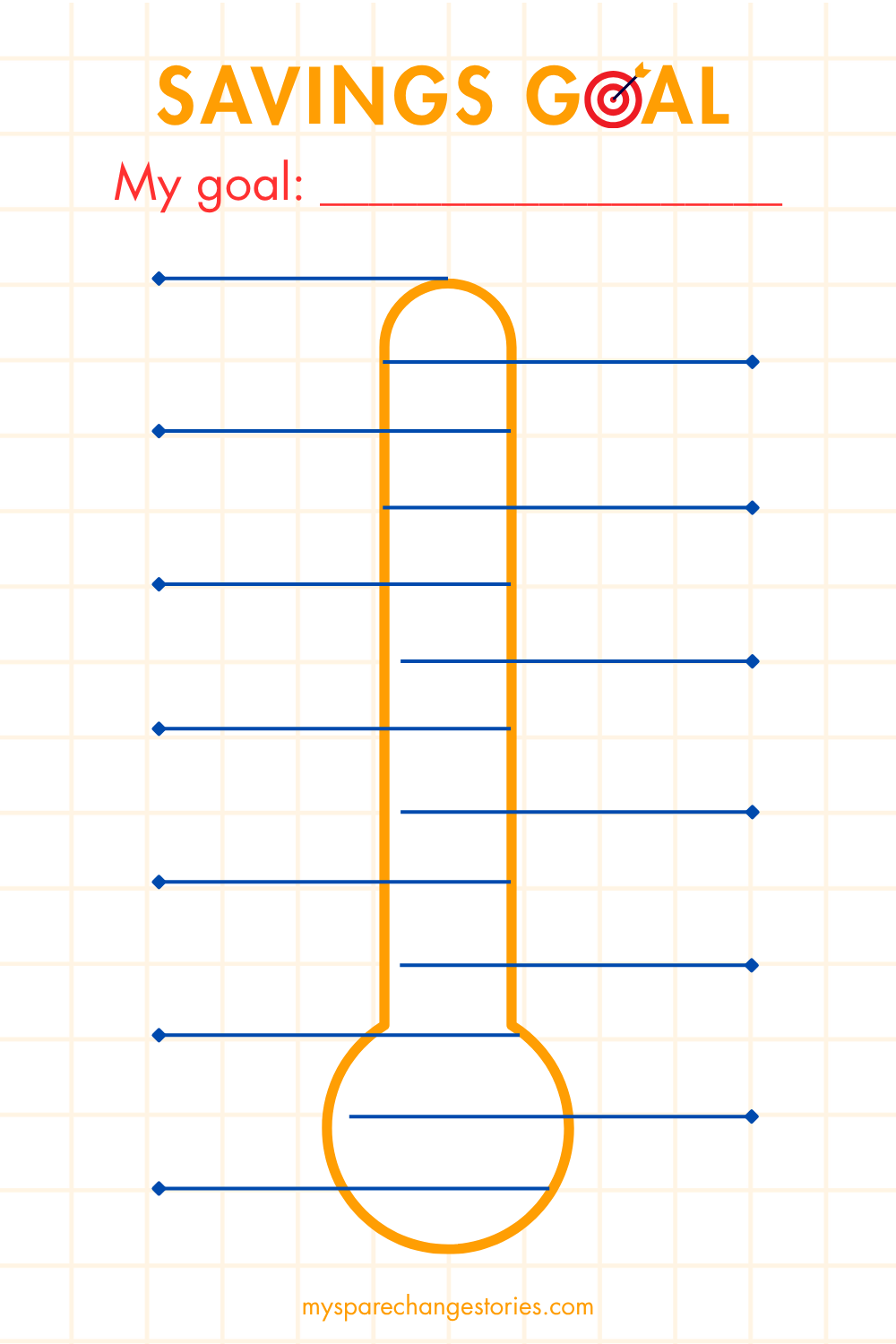
A savings tracker can be a thermometer drawn on paper, a grid where your child colors one square per dollar, or a sticker chart on the fridge. Decorating the jar or chart is half the fun, and a small notebook for spending shows where money goes. Watching the number climb toward the goal gives each deposit a spot on the page.
Add a Waiting Rule for Spending
A kid’s first instinct is usually to spend money as soon as it shows up, so a waiting rule puts a pause between wanting something and buying it. One easy version is sleeping on any purchase for 48 hours, then checking if they still want it and if it fits in the spend jar. Sorting a purchase into a need, like school supplies, or a want, like a new game, also gives your child a way to decide without you having to play the bad guy. Keeping the savings jar somewhere that takes effort to reach, like a high shelf or a closet, also keeps it from being the first place a kid looks when they want to buy something.
Everyday Ways for Kids to Save Money
Small habits at home cut costs for the whole family, and a few are easy enough for kids to take on:
- Turn off lights and electronics when leaving a room
- Take shorter showers and turn off the tap while brushing teeth
- Compare prices before buying, and look at used items for things like sports equipment or books
- Pack lunch from home, since buying lunch at school adds up
- Have a movie night at home with friends instead of going to the theater
How Kids Can Save Money Fast
There are two ways to speed up a savings plan: set aside a bigger amount each week, or bring in more money to set aside. The $100 rows in the table above show the first one, where $5 a week takes 20 weeks and $10 a week takes 10.
For the second, a one-time sale of outgrown toys, extra chores, or birthday money that goes straight into the goal jar adds to the total faster than the weekly amount alone. If relatives ask what your child wants for a birthday, you can point them toward cash for the goal instead of another toy. The math stays the same either way, so the speed depends on how much your child can realistically gather.
How to Save Money as a Teenager
Teens have more ways to earn, so the plan changes more than the basic idea does. Babysitting, mowing lawns, tutoring, and part-time retail jobs all bring in income, and bigger goals like a phone, a car, or college tuition can each get their own price and weekly amount, like the table above. Reviewing a first paycheck together explains deductions, since taxes and other deductions depend on the country you live in. In the US, a teen with earned income can also have a custodial Roth IRA opened for them, and other countries have their own long-term options.
My guides to money management for teens, from allowance to first paycheck and a simple budget for teens cover how to split income once it starts arriving, and there’s also a post on what to spend money on as a teenager for the fun-money side.
What Kids Pick Up From Watching You
Kids are always watching (sometimes more than you’d like), so just talking out loud about your own savings goals totally counts as a lesson. If you set up a family savings goal and track it together, your child gets a front-row seat to the same steps they’re practicing, and saving money stops feeling like something that only happens to them. Just mentioning what you’re saving for and how long it might take is enough to get the ball rolling.
Start With the First $1
A $60 game and a $6,000 goal run on the same math, a price divided by a weekly amount, and the only thing that changes is the number of weeks. Everything above comes down to a jar, a price written where your child can see it, and the habit of setting money aside before it gets spent. The plan can take different shapes, like $2 a week toward a $20 toy, a three jar split on a $10 allowance, or a first youth savings account around age 10, and each version keeps those same few parts. The first dollar in the jar is where the math begins, and finding a jar to put it in is usually the longest step.